

African Central Banks Shift Towards Rate Cuts Amidst Easing Inflation
Since the beginning of 2026, numerous African central banks have initiated reductions in benchmark interest rates, striving for multi-year lows. This movement is largely attributed to easing inflationary pressures, the return of single-digit price growth across various economies, and the stabilization of local currencies, aided by record-high precious metal prices.
Overview of Interest Rate Adjustments
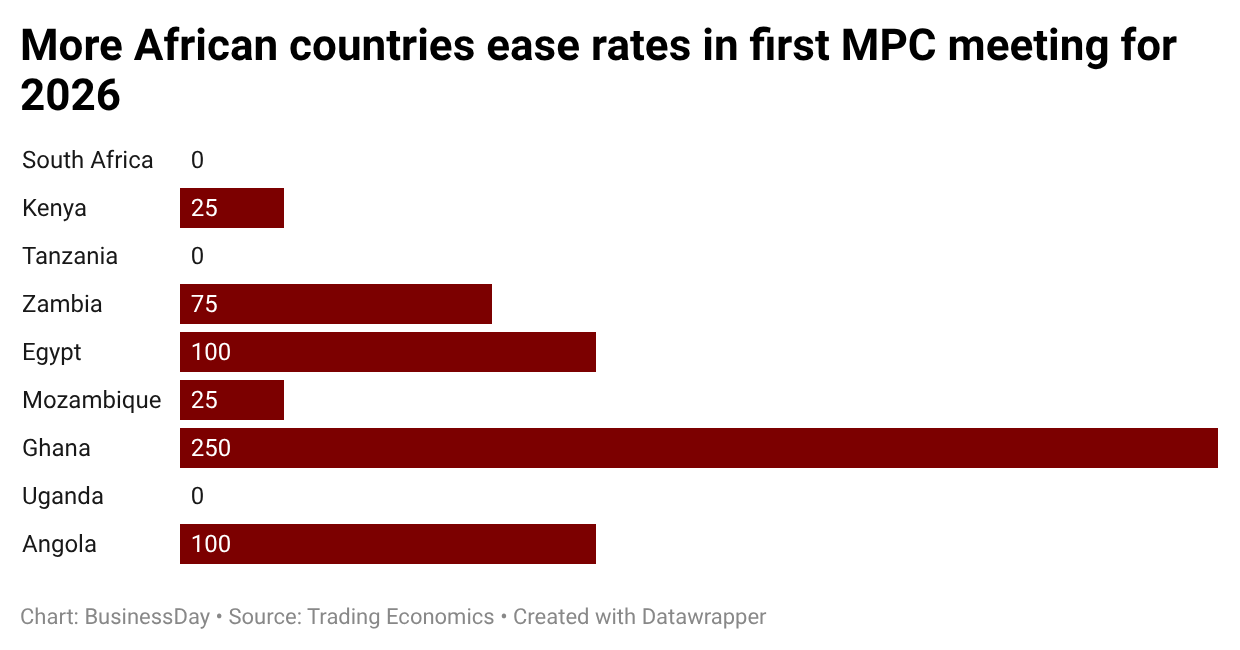
A recent analysis conducted by BusinessDay highlights the monetary policy changes from nine African nations that convened their first Monetary Policy Committee (MPC) meetings in 2026. Among these, six countries—Kenya, Egypt, Angola, Ghana, Mozambique, and Zambia—have proceeded with rate cuts, while Uganda, South Africa, and Tanzania chose to maintain their existing rates. The significance of this trend is underscored by the fact that four of the nations easing their rates are among Africa’s largest economies by GDP.
The World Bank’s latest Africa Pulse report mentions that many central banks in sub-Saharan Africa are either cutting interest rates or holding off on further tightening measures due to a reduction in inflationary pressures. However, the report also cautions about the potential for renewed inflation risks stemming from global political uncertainties.
Ghana: The Front Runner in Rate Cuts
Ghana stands out as the most proactive central bank in this easing cycle, reducing its benchmark rate by a total of 250 basis points to 15.5% as of January—marking its lowest point since February 2022. This rate cut follows a notable slowdown in inflation, which dipped for the thirteenth month in a row to a near 30-year low of 3.8% in January, significantly down from the disastrous peak of over 54% in December 2022 during the height of the country’s currency crisis.
The nation’s improved fiscal circumstances, along with soaring gold prices, have bolstered external reserves, leading to a significant appreciation of the cedi against the dollar and alleviating imported price pressures.
Egypt and Angola Follow Suit
Egypt and Angola have also registered significant policy shifts, each reducing rates by 100 basis points to 19% and 17.5%, respectively. Egypt’s latest decrease positions its borrowing costs at their lowest since July 2023, extending a significant easing cycle. Prior to this, policymakers had slashed rates by a total of 725 basis points between February and December of the previous year as inflation moderated from a peak of 38% in September 2023 to 11.9% in January 2026.
Similarly, Angola’s monetary easing reflects a declining inflation rate, which fell to 14.56% in January, down from 15.7% in December, as the nation continues to stabilize its currency amidst moderating domestic price pressures.
Rate Cuts Across Southern and East Africa
Zambia has also made a move to reduce its policy rate by 75 basis points to 13.5%, following a second consecutive cut and reaching its lowest level since April 2024. This decision was supported by a drop in inflation to 9.4% in January, attributed to a healthy maize harvest and a robust kwacha.
Other countries like Mozambique and Kenya have opted for more conservative rate cuts of 25 basis points. Mozambique’s new rate of 9.25% represents its lowest borrowing costs since 2015, whereas Kenya’s adjustment to 8.75% marks its tenth consecutive easing step, suggesting confidence in controlled inflation risks.
Cautious Stance from Some Nations
Not all central banks have jumped on the easing bandwagon. Uganda, South Africa, and Tanzania held their policy rates firm at 9.75%, 6.75%, and 5.75%, respectively, reflecting ongoing concerns regarding persistent inflation, currency volatility, and uncertain external financial conditions.
Attention on Nigeria’s Monetary Policy Direction
As focus shifts towards Nigeria, the continent’s most populous nation is set for its first MPC meeting soon. The country cautiously entered an easing cycle in September with a 50-basis point reduction—the first in five years—as inflation began to stabilize.
Analysts forecast further cuts could see policy rates drop to 26%, depending on the continued moderation of inflation. Recently, Nigeria’s National Bureau of Statistics reported a decline in headline inflation to 15.10% in January from 15.15% in December, marking the lowest level since November 2020, largely due to a robust currency aiding import costs.
Conclusion: Navigating Towards a Cautious Optimism
The ongoing reductions in interest rates amid falling inflation, strengthened commodity revenues, and stabilizing currencies represent a fragile yet significant turning point for several economies across Africa. While risks associated with global volatility, fiscal challenges, and weather-related food shocks persist, the current trajectory indicates improving financial conditions, raising hopes for a revival in credit growth across many of Africa’s principal economies as they venture into 2026.
