

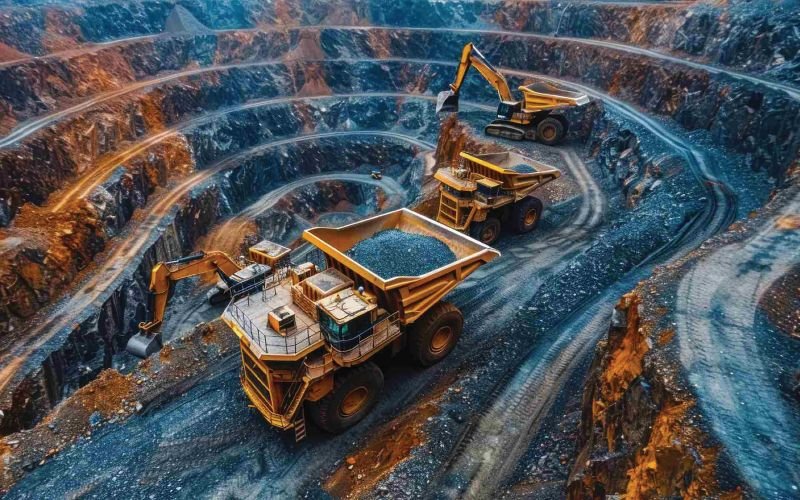
Africa’s abundant mineral wealth, including essential resources like cobalt, lithium, copper, and Platinum Group Metals (PGMs), plays a pivotal role in the global transition to clean energy.
Supplied by African Energy Chamber
As the global community intensifies its move away from fossil fuels, Africa is stepping into a crucial role as a key supplier of the minerals necessary to support this transition. The African Energy Chamber’s (AEC) State of African Energy 2026 Outlook underscores how the continent’s vast reserves of critical minerals position it at the heart of supply chains vital for the deployment of renewable energy technologies and the adoption of electric vehicles (EVs).
Global Demand for Critical Minerals
The energy sector’s transition is generating unparalleled demand for specific minerals essential to clean technologies. Products like solar panels, wind turbines, EV batteries, and energy storage systems require significantly higher quantities of cobalt, lithium, and nickel compared to traditional energy systems. Forecasts suggest global demand for these critical minerals could surge by as much as 500% by 2035, compared to 2023 levels. However, this increasing demand is met with potential supply deficits as we approach the decade’s end, further highlighting the need for diversified, reliable sources of these essential materials.
Africa is home to some of the richest deposits of these minerals, making it indispensable to the ongoing energy transition. The continent is projected to lead global production in cobalt, copper, gold, and PGMs by 2024, with the lithium sector also rapidly expanding. Key countries in mineral production include the Democratic Republic of Congo (DRC), Zambia, Zimbabwe, Mali, Namibia, South Africa, and Morocco. Historically, China has been the largest foreign investor in Africa’s mining landscape, leveraging initiatives like the Belt and Road Initiative to secure resource access. Recently, however, the US and EU have increased their engagement, emphasizing strategic partnerships and infrastructure investments to bolster mineral supply chains.
Significance of Cobalt and Lithium
Cobalt is a fundamental component of lithium-ion battery production. In 2024, the DRC alone accounted for a substantial portion of global cobalt supply, with major mines such as Kisanfu (51.92kt, representing nearly 20% of global production), Tenke Fungurume (48.08kt), and Kamoto (27.2kt) collectively producing over 50% of the world’s cobalt output. To enhance its value, the DRC is focusing on developing local refining capabilities to convert cobalt hydroxide into higher-value cobalt metal while emphasizing ethical production and environmental standards. The government has enacted temporary export bans and is exploring flexible export quotas to stabilize market conditions and ensure profitability for producers.
In 2024, Africa produced 124,230 tons of lithium carbonate equivalent (LCE), primarily sourced from hard rock spodumene deposits. Zimbabwe leads the continent in lithium output, with contributions also coming from Mali, Namibia, South Africa, Ghana, and the DRC. The continent holds approximately 26.7 million tons of identified lithium resources, accounting for about 5% of global reserves. Morocco’s current advancements in battery-grade chemical refining and Zimbabwe’s ambitious USD450-million refinery project at the Mapinga Industrial Park highlight the region’s commitment to developing its mineral sector. With production costs ranging from USD250 to USD650 per ton of spodumene concentrate, Africa remains competitive in the global market.
Africa’s Strategic Role in the Energy Transition
Securing critical mineral supply chains from Africa is a top priority for global energy stakeholders. The US has invested over USD200 million in African mining initiatives via the Development Finance Corporation (DFC) and the Minerals Security Partnership, focusing on responsible sourcing and the development of local battery production in collaboration with the DRC and Zambia. Moreover, ambitious infrastructure projects like the Lobito Corridor—a rail link connecting Zambia and Angola—aim to establish efficient trade routes for mineral exports. Backed by a USD553 million DFC loan and EU support, such projects are crucial for linking African mining hubs to international markets sustainably.
“Africa’s mineral wealth is not just a resource; it is a strategic asset for global energy transition. By promoting local benefits, ethical production, and sustainable supply chains, Africa stands to drive industrialization and secure its place at the forefront of the clean energy economy,” states NJ Ayuk, executive chairperson of AEC.
With its critical mineral reserves crucial for global energy security and the clean energy transition, Africa is well-positioned to enhance its role in supplying essential minerals for a decarbonized future. Ongoing exploration, investment in refining facilities, and forming strategic partnerships will further strengthen the continent’s position in this vital sector.
