

The African Union’s Landmark MoU: Paving the Way for Nuclear Energy in Africa
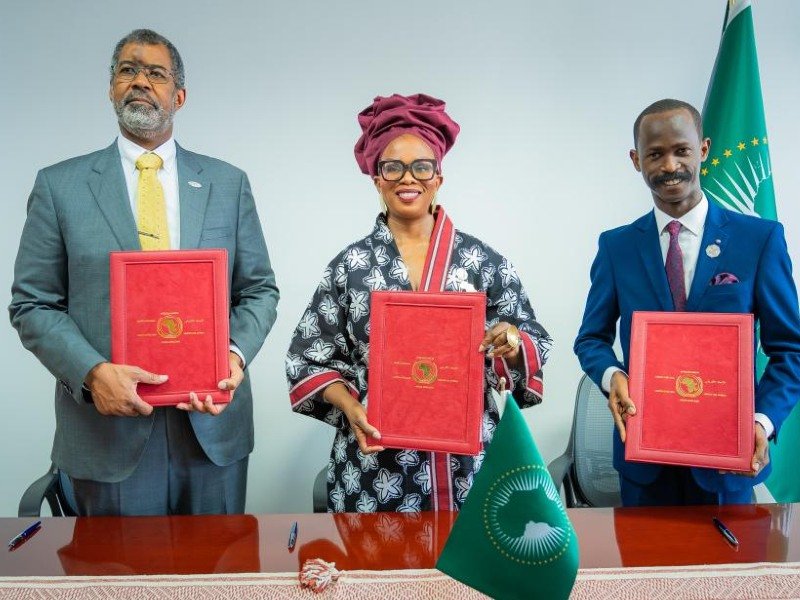
The African Union (AU), in collaboration with the African Commission on Nuclear Energy and the OECD Nuclear Energy Agency, has formalized a significant Memorandum of Understanding (MoU). This agreement aims to accelerate the peaceful deployment of nuclear technology across Africa, enhancing regulatory frameworks and boosting technical capacity while opening doors to financial support. With this strategic initiative, nuclear energy is poised to become a crucial player in the continent’s industrial growth and energy security landscape. As African nations evolve from being mere uranium exporters to potential nuclear power producers, the continent might be on the verge of achieving critical energy mass.
A Positive Chain Reaction: The Three-Year MoU
This MoU is valid for three years with an option for extension and aims to create a coordinated platform across the continent for nuclear energy deployment, coinciding with a rising investment appetite. According to the International Atomic Energy Agency, Africa has the potential to increase its nuclear power capacity tenfold by 2050 under an optimistic scenario. More conservative projections suggest a twofold increase by 2030 and fivefold by 2050. The AU’s MoU seeks to transform this substantial potential into actionable nuclear energy projects across the continent.
“This MoU represents more than a partnership – it is a strategic step toward strengthening Africa’s energy sovereignty and advancing the peaceful use of nuclear energy as a crucial catalyst for industrialization, resilience, and sustainable development across our continent,” stated Lerato D. Mataboge, Commissioner for Infrastructure and Energy, AU Commission.
Africa’s Nuclear Paradox: Uranium-Rich Yet Power-Poor
Despite being responsible for 15% of global uranium production, Africa is generating less than 1% of the globe’s nuclear electricity, with only South Africa’s Koeberg facility operational. Namibia stands out as a major uranium producer with mines like Rössing and Husab contributing nearly 10% of global demand. Other nations, including Niger, South Africa, Tanzania, Malawi, and Mauritania, are also engaging in million-dollar uranium developments. There lies a pivotal opportunity in converting the continent’s abundant uranium resources into domestic energy production, thereby enhancing industrial capacity and ensuring long-term energy sovereignty.
Africa’s Nuclear Ambitions Heat Up
The MoU arrives during a surge in Africa’s nuclear-focused initiatives. Ghana plans to establish its first nuclear facility by the early 2030s, already progressing with site selection and power purchase agreements. Egypt is in the process of developing its first nuclear power station, El Daaba, targeting 4.8 GW across four reactors, with the first expected to be operational by 2028. Meanwhile, Kenya plans a 2 GW nuclear plant with expansion potential, and Senegal is focusing on nuclear reactors for educational, research, and training purposes.
South Africa is also eyeing an augmentation of its nuclear capacity, aiming for 5.2 GW of new nuclear generation by 2039 as articulated in its 2025 Integrated Resource Plan. The nation currently has numerous small modular reactor (SMR) technologies in various stages of feasibility, with 40 financial institutions committed to invest in nuclear energy projects. Additionally, Koeberg’s operating license has been extended by 20 years, allowing continued operation until 2045.
Why Timing Matters: Addressing Institutional Capacity
Historically, Africa’s nuclear progression has been stifled not by a shortage of uranium resources or political will but rather due to insufficient institutional capacity. The recent MoU aims to tackle these challenges head-on by enhancing policy and regulatory frameworks. It will support skills development, foster industrial capacity building, and facilitate collaborative research and knowledge sharing. This follows a broader trend where African nations are partnering with global allies to bolster their institutional frameworks.
For instance, Mali and Russia signed a civil nuclear energy agreement in 2025 to establish an intergovernmental commission for cooperative oversight. Additionally, China and Nigeria formalized an agreement in 2024 to advance nuclear facility development by the 2030s. Such partnerships are emblematic of Africa’s efforts to reduce entry barriers for countries venturing into nuclear energy development.
The Future of Africa’s Nuclear Development
As Africa stands at a pivotal juncture in its nuclear journey, the recent MoU may serve as a crucial catalyst for coordinated reactor deployment across the continent. By prioritizing regulatory harmonization and institutional strengthening, the agreement supports Africa’s long-anticipated transition from being solely a uranium exporter to becoming a value-added nuclear power producer, securing a sustainable energy future for the region.
