

Impact of Global Energy Market Disruptions on African Economies
The global economic landscape is intricately woven, and its fabric is particularly vulnerable to external shocks. Currently, African nations are grappling with the dual pressures of rising energy prices and food security threats, a situation exacerbated by geopolitical conflicts like the Iran conflict. Such crises highlight the transmission mechanisms that escalate external price fluctuations into significant domestic inflationary pressures.
Energy markets serve as the backbone of economic activity, influencing diverse sectors such as electricity generation and agricultural production. When disruptions occur, they create a ripple effect across multiple facets of the economy, challenging the resilience of fiscal and monetary policies.
Energy Price Connections in African Economies
The current crisis underscores how energy price shocks propagate through African economies via several interconnected mechanisms. The most immediate impact comes from direct energy consumption expenses, which affect transportation systems, electricity generation, and industries reliant on imported oil.
Moreover, oil price fluctuations have secondary impacts like inflation in agricultural input prices, particularly in fertilizers and diesel used for irrigation.
Key transmission channels include:
- Electricity generation costs in nations dependent on fossil fuels.
- Rise in transportation costs impacting logistics and goods movement.
- Increased manufacturing input costs, affecting profit margins and competitiveness.
- Higher expenses for agricultural machinery, hindering food production.
Fertilizer production inherently requires energy, and disruptions in energy markets can sharply raise agricultural productivity costs. Additionally, declining oil production in the U.S. emboldens global supply constraints, worsening these pressures.
A tertiary impact emerges from currency depreciation pressures, driven by inflated import bills, especially in countries reliant on petroleum imports. The demand surge for foreign currency can lead to exchange rate instability, further complicating economic recovery.
Structural Vulnerabilities and Economic Exposure
African markets exhibit heightened sensitivity to energy price fluctuations due to unique structural characteristics that set them apart from more diversified economies. A particularly salient vulnerability is the reliance on energy imports without the benefit of domestic refining capacities.
The ongoing energy transition challenges alter global market dynamics, disproportionately affecting African countries.
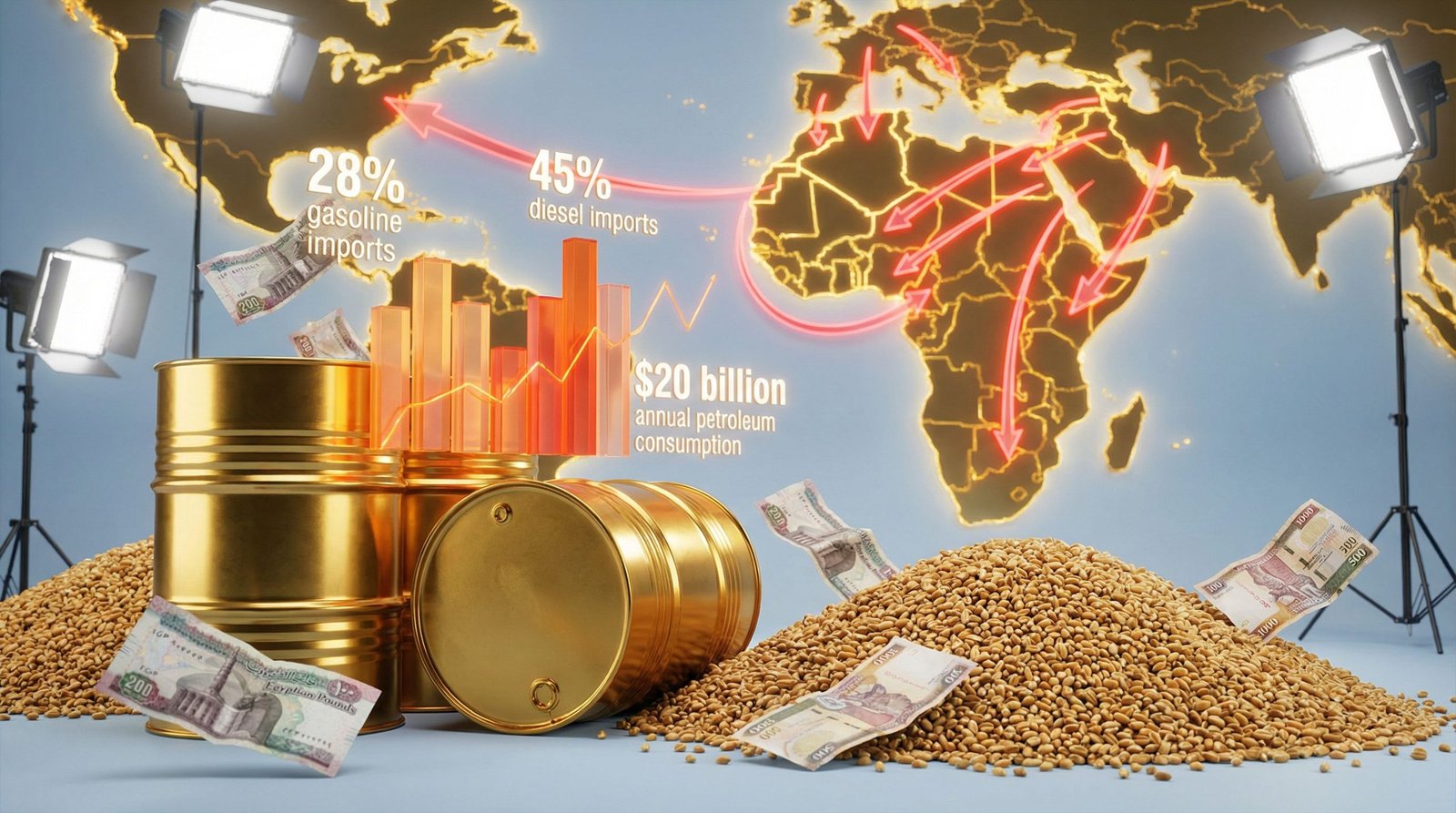
| Metric | Value | Economic Impact |
|---|---|---|
| Annual petroleum consumption | $20 billion USD | Significant foreign exchange outflow |
| Population exposure | 108 million people | Price modification impacts on a broad scale |
| Gasoline import dependency | 28% of consumption | Vulnerability to supply disruptions |
| Diesel import dependency | 45% of consumption | Critical for transportation and agriculture |
In Uganda, geographic challenges amplify energy security risks, with the country importing 75% of its petroleum while being landlocked, which escalates transport costs. A limited refining capacity across Sub-Saharan Africa obliges nations to depend on imported petroleum products, curtailing responsiveness to price volatility.
Role of Currency Markets in Economic Pressure
Exchange rates act as a secondary amplifier of the impacts from rising global energy prices. As energy import bills surge, a concurrent increase in foreign currency demand can push domestic exchange rates downward. This process creates a cycle of inflation and economic instability.
The sequence is as follows:
- Initial shock: Increased global oil prices elevate import costs in USD.
- Foreign exchange pressure: Heightened demand for foreign currency to settle energy costs.
- Currency depreciation: Insufficient foreign reserves exacerbate demand surges.
- Price multiplication: A weaker local currency drives up energy import costs.
- Inflation expectations: Anticipated further dips in currency value exacerbate inflation.
For instance, Egypt’s $20 billion annual petroleum bill creates substantial foreign currency demand, placing pressure on the Egyptian Pound during times of energy price volatility.
Interlinking Energy and Food Security
The energy-food price relationship compounds economic stresses, significantly impacting African economies with extensive agricultural sectors. Escalating energy and food prices, especially amid the Iran conflict, permeate food markets through various interconnected channels, showcasing the integrated nature of today’s economic fabric.
Energy inputs for agriculture are critical, relying heavily on diesel-powered machinery for tasks like irrigation and harvest. Consequently, fluctuations in fuel prices pose immediate challenges for smallholder farmers in Sub-Saharan Africa.
Transportation networks also play a vital role, as food products predominantly depend on diesel-powered logistics. Therefore, rises in fuel expenses directly inflate food distribution costs and consumer prices.
Energy demands for food processing and storage significantly strain operational costs, highlighting vulnerabilities in food supply chains when energy prices soar.
Differentiated Food Security Risks
The synergy between escalating energy and food prices leads to varied impacts across African populations, influenced by income levels, geographical factors, and agricultural capabilities.
Risk exposure demonstrates significant variation:
- Urban food-insecure populations spend large portions of their income on food, giving them limited alternatives.
- Rural smallholder farmers experience input cost challenges but have the potential for greater food production.
- Net food importing countries encounter dual threats from raised production costs and inflated import prices.
Officials from Uganda and Egypt have underscored concerns regarding how these dynamics jeopardize vulnerable demographics, as transportation and production costs remain closely tied to energy price fluctuations.
Strategies for Emergency Policy Responses
In response to rising energy and food prices, African governments are enacting various crisis management strategies while striving to maintain economic equilibrium. These measures reveal inherent trade-offs faced by policymakers under pressure.
Egypt employs demand management techniques such as mandatory early closure hours in retail sectors to curb energy consumption. This approach signifies a considerable shift from the country’s historically active evening economy, revealing the severity of energy supply constraints.
Utilizing strategic petroleum reserves has become crucial for mitigating supply shocks and price instability. Egypt has activated its reserves while implementing targeted subsidies for essential services, though specific allocations remain undisclosed.
Regional cooperation initiatives are emerging as countries seek collective solutions to mutual challenges. Recent discussions between Uganda and Egypt’s national officials aim to assess broader implications of the crisis and coordinate responses.
Policy Trade-off Implications
Governments face an inherent policy trilemma when responding to energy price shocks, needing to balance consumer protection, fiscal sustainability, and economic stability.
The three fundamental policy options entail unique trade-offs:
| Policy Approach | Consumer Impact | Fiscal Impact | Implementation Challenges |
|---|---|---|---|
| Maintain subsidies | Protects consumer purchasing power | Puts strain on government budgets | Requires substantial fiscal resources |
| Adopt market pricing | Inflates the cost of living | Reduces fiscal load | Risk of social unrest and political tensions |
| Implement targeted support | Selective consumer protection | Moderate fiscal expenditure | Demands administrative capacity |
The stakes rise for regions with constrained fiscal space and limited governance capabilities. Many African governments may lack the financial resources to sustain broad subsidies throughout prolonged periods of high energy prices, while targeted support initiatives may require sophisticated infrastructures that aren’t readily available.
Currency Depreciation Feedback Mechanisms
Exchange rate movements can invoke self-perpetuating cycles that elevate the domestic impacts of global energy price shocks. This feedback loop signifies one of the more formidable challenges faced by African monetary authorities in crisis management.
The feedback process unfolds in several stages:
- Higher energy import bills increase foreign currency demand.
- This demand diminishes foreign reserves, exerting pressure on domestic exchange rates.
- A weaker domestic currency raises the cost of energy imports.
- This leads to further price increases, compounding inflationary pressures.
For example, Egypt’s $20 billion annual energy import creates substantial foreign exchange needs, magnifying pressures on the Egyptian Pound during global energy market fluctuations.
Other East African currencies are susceptible to similar fiscal strains due to limited exports and strong reliance on imported commodities.
Long-Term Resilience through Infrastructure Development
Tackling structural vulnerabilities necessitates strategic investments in infrastructure and cooperative regional initiatives that can curtail dependency on volatile energy markets. Egypt’s commitment to supporting water infrastructure in Uganda and the broader Nile Basin aims to establish long-term resilience through projects like dam construction.
Regional petroleum storage facilities could serve as buffers during times of price volatility and supply disruptions, while strategic reserves situated in various locations would mitigate risks associated with single points of failure.
Moreover, renewable energy solutions have long-term potential to decrease import reliance, though substantial investment and infrastructural advancements remain prerequisites. Sub-Saharan Africa possesses untapped solar energy potential that awaits development due to financial and logistical challenges.
Cross-border electricity grids could facilitate regional energy sharing, mitigating vulnerabilities tied to domestic supply failings. Investing in infrastructure and fostering collaboration will be pivotal for achieving this goal.
Enhancement Strategies for Agricultural Resilience
Developing local fertilizer production capacity is vital to diminishing sensitivity to global fertilizer price fluctuations while simultaneously bolstering agricultural productivity. Numerous African countries hold the necessary raw materials but lack essential processing infrastructures.
Climate-resilient crop varieties and initiatives to facilitate regional food trading can further bolster food security, reducing reliance on energy-heavy agricultural inputs. Establishing strategic grain reserves at the regional level could provide essential buffers during times of crisis.
Water resource management along the Nile Basin provides a collaborative framework for optimizing the interplay between water and energy while enhancing agricultural productivity and resilience to climate-induced challenges.
Investment Climate and Economic Growth Trajectories
The ongoing surge in energy and food prices, in light of the Iran conflict, presents various investment risks that impact African economic growth potential and foreign capital flows. These external shocks can alter the investment landscape and economic development pathways.
Increased operational costs substantially affect project returns in energy-affected sectors, while social instability linked to food price inflation could inflate political risk premiums. Additionally, currency volatility complicates financial forecasting and project planning.
Tariff-related market pressures contribute to heightened global economic uncertainty, impacting investment flows into African markets.
Sector-specific impacts vary widely based on energy consumption intensity, export orientation, and market dependence:
| Economic Sector | Energy Sensitivity | Adaptation Potential | Investment Outlook |
|---|---|---|---|
| Manufacturing | Highly sensitive to input costs | Possibility for improved energy efficiency | Requires thorough risk evaluations |
| Agriculture | Moderate vulnerability via input costs | Opportunities in technology and diversification | Emerging selective opportunities |
| Mining | Manageable through hedging techniques | Integration of renewable options is feasible | Outlook remains relatively stable |
| Services | Varies by subsector | Potential efficiencies from remote work | Mixed effects and opportunities |
Revisions to GDP growth forecasts of between 0.5% and 1.5% downward appear imminent among the affected economies, while inflation targets become increasingly challenging for central banks aiming for credibility. Growing current account deficits from bloated import bills may hinder balance of payments health, impacting debt sustainability metrics.
Regional Cooperation for Crisis Management
Continental and regional cooperation mechanisms offer promising paths toward collaborative crisis responses, potentially yielding more effective solutions compared to isolated national strategies. The African Union’s energy cooperation framework could facilitate the establishment of shared petroleum reserves, coordinated emergency responses, and joint renewable energy projects.
The Nile Basin cooperation model exemplifies how regional infrastructure integration can simultaneously address various challenges. By optimizing the water-energy nexus and sharing hydroelectric capacities, infrastructure development can significantly enhance agricultural productivity.
Cross-border pipeline systems and integrated regional energy markets can reduce individual countries’ vulnerability while fostering economies of scale to enhance energy security and price stability.
Strategic Planning for Sustainable Economic Resilience
The current crisis concerning energy and food prices reveals fundamental weak spots in African economic structures, but also uncovers significant opportunities for building long-term resilience. Success will hinge upon coordinated policy responses that address immediate economic pressures while also fostering structural resilience through diversification, regional collaboration, and strategic infrastructure investments.
Diversification efforts should focus on mitigating risks tied to energy supply, food production, and foreign exchange earnings. Mechanisms of regional integration may provide comprehensive solutions that individual countries might struggle to achieve alone, while accelerating innovation in sustainable technologies could lead to diminished import dependencies.
Preparing for crises via the establishment of strategic reserves and developing coordinated emergency response capabilities will underpin essential frameworks for managing future external shocks. The synergy of immediate crisis management with long-term resilience initiatives embodies the most promising avenue for fostering African economic stability in an increasingly volatile global arena. Furthermore, the global response to energy crises underscores the imperative for international collaboration in mitigating these challenges.
