

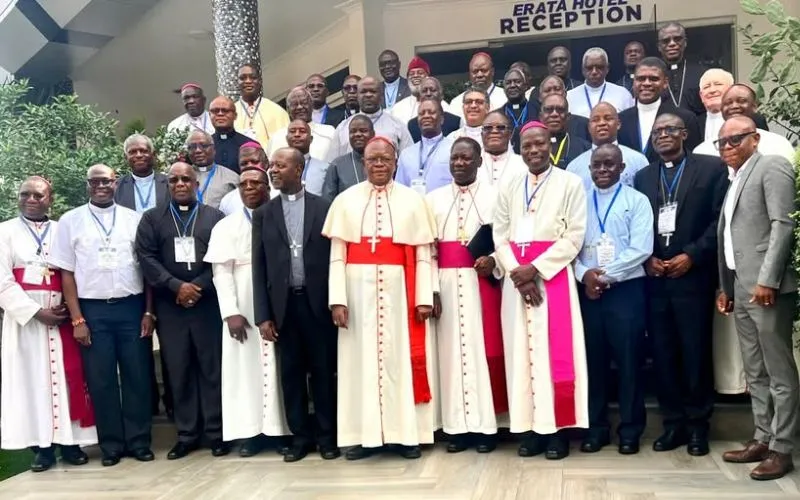
NAIROBI, Kenya — Catholic bishops across Africa have released a comprehensive report addressing the pastoral challenges of polygamy, titled “Pastoral Challenges of Polygamy.” This 25-page document responds directly to the mandate from the XVI Ordinary General Assembly of the Synod of Bishops, following the Synod on Synodality, to promote theological and pastoral insights on this pertinent issue, as explored by the Symposium of Episcopal Conferences of Africa and Madagascar (SECAM).
The report, created by a specialized SECAM commission of theologians and ecclesiastical experts, involves a structured reflection on polygamy, anchored in a method described as “quadruple listening.” This approach entails an attentive engagement with African cultural realities, sacred Scripture, Church teachings on Christian marriage, and existing pastoral practices throughout African communities.
Understanding Polygamy in African Families
To contextualize polygamy, the report emphasizes the broader cultural and religious framework surrounding the African family. The SECAM commission describes the African family as structured on the covenant, representing alliances among familial groups, ancestors, and God.
In this worldview, childbirth is central. Commission members highlight that a child is viewed as a divine blessing, an esteemed treasure perpetuating family lineage while fortifying present life.
Polygamy is situated within this cultural framework as a marital regime defined as an individual being linked to multiple spouses concurrently. While polygamy encompasses both polyandry and polygyny, the latter—where a man has multiple wives—is prevalent in Africa.
Historically, polygamy arose from specific societal needs; in agrarian and nomadic communities, large families promoted economic stability and security. Polygamous structures served purposes beyond family size, including solidarity and political alliances.
Marriage within traditional African culture also encompasses communal and spiritual dimensions, making divorce rare. Ceremonies often involve entire families and invoke ancestors, illustrating the communal essence of family life.
SECAM president Cardinal Fridolin Ambongo (left) and secretary-general Father Rafael Simbine Junior (right). | Credit: ACI Africa
Biblical Insights on Polygamy
The SECAM report also includes reflections on the diversity of marital practices documented in the Scriptures. The Bible illustrates varying forms of marriage, including polygamous unions among biblical figures, particularly in the Old Testament.
However, the report highlights that monogamy has evolved as the biblical ideal. Particularly noted is the Book of Tobit, which extols monogamous families characterized by fidelity and religious devotion.
The commission interprets this shift as part of a “divine pedagogy,” indicating that while God allowed polygamous practices historically, the ultimate vision for marriage was revealed through Christ.
In Jesus, the commission asserts, it becomes clear that polygamous unions do not align with God’s intended marital design, as He emphasized a union between “one man and one woman.”
Furthermore, the report tackles common cultural reasons for polygamy, such as issues surrounding infertility. The commission firmly states that biological challenges do not justify the practice of polygamy.
It suggests that true fruitfulness encompasses fidelity to God and living virtuously, rather than merely producing biological offspring.
Ethical Considerations on Polygamy
The report raises ethical questions regarding the compatibility of polygamous unions with the essence of Christian marriage. SECAM members observe that Christian marriage is characterized as a total mutual gift between two individuals.
This leads to inquiries about how a person can fully engage in such a gift when extending it to multiple spouses simultaneously.
Emotional and psychological dimensions also come into play, questioning whether shared relationships can undermine genuine communion between spouses.
The apostle Paul’s analogy between marriage and the relationship between Christ and the Church further elucidates the Christian conception of marriage as an exclusive and singular covenant of love.
Pastoral Challenges in the Context of Baptism
Polygamy poses significant pastoral challenges within the African Church, particularly regarding individuals in polygamous unions seeking baptism or full communion in Catholic communities.
Historically, missionaries required monogamous marriage as a prerequisite for baptism, creating a pattern where “monogamous marriage was necessitated for Christian initiation.”
Contemporary pastoral practices have evolved, with many dioceses adopting varied approaches. One method encourages men wishing to participate fully in sacraments to choose one spouse while continuing to support others.
Another approach is the “permanent catechumenate,” allowing polygamous individuals to engage in community life and catechetical formation without receiving baptism or sacraments due to their marital situation.
Finally, a third approach involves baptizing the first wife in cases where she was placed in a polygamous situation without her consent, ensuring her full integration into the Christian community.
Recommendations on Baptism for Polygamous Individuals
A key conclusion drawn from the SECAM commission relates to the sacrament of baptism. The document argues that baptizing individuals intending to remain in polygamous unions risks compromising the sacramental meaning of baptism itself.
“Baptizing a polygamist who intends to maintain his marital status could imply legitimizing a situation that deviates from the intended form of baptism,” they warned.
For this reason, the commission recommends that baptism should occur following a commitment to monogamous marriage.
Polygamous catechumens should undergo extensive preparation to embrace the Gospel message and commit to monogamous marriage prior to baptism.
Implications for Catholics in Polygamous Families
At a pastoral level, the SECAM commission emphasizes the importance of accompaniment over exclusion. The Church should adopt “a pastoral approach of proximity, listening, and support,” recognizing that many polygamous structures cannot easily be dissolved.
In such contexts, pastoral lines of support may foster existing family structures while gradually introducing the Christian perspective on marriage.
Moreover, members of polygamous families—especially the first wife and children—may qualify for full sacramental participation, while others might continue living their faith in a penitent manner while aspiring towards full integration.
Ultimately, the commission frames this issue as part of a broader inculturation process, emphasizing the Church’s goal in Africa to present the Gospel while respecting cultural realities and remaining faithful to Christian interpretations of marriage.
This article has been adapted from an original report by ACI Africa, a sister service of EWTN News in Africa.
