

Empowering Women-Led Enterprises: A Global Call to Action
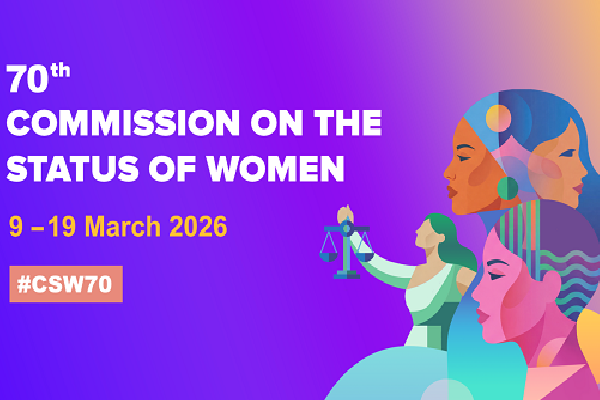
In a powerful initiative aimed at bolstering women-led enterprises worldwide, the recent 70th Session of the United Nations Commission on the Status of Women (CSW 70) gathered global stakeholders in New York. This pivotal discussion concentrated on promoting women-owned businesses, particularly those in Nigeria.
The Need for Systemic Change
Organized by Women Rising International, the Centre for Gender Economics in Africa (CGE Africa), and the New Nigeria Foundation, the session moved beyond mere rhetoric, contemplating genuine pathways for women’s economic empowerment. Participants hailed from various nations, including the United States, Canada, South Africa, and Kenya, showcasing a consensus: effective economic empowerment of women necessitates a systemic overhaul.
Highlighting the Importance of Women-Owned Businesses
Dr. Anna Madziga, Country Representative of Women Rising International in Nigeria, emphasized that women-owned businesses are pivotal for inclusive growth and sustainable development. Despite their potential, women entrepreneurs encounter numerous challenges, such as limited access to finance, restrictive policies, unpaid care responsibilities, and unequal market participation.
Key Themes of the Discussion
The discourse revolved around three crucial themes: policy design, access to finance, and mentorship ecosystems.
Rethinking Policy Design
Elizabeth Young, CEO of Women Rising International, raised concerns about the disconnect between policies aimed at supporting women and their real-life experiences. Many existing policies are often complex, poorly communicated, and fail to account for women’s responsibilities in informal sectors.
She called for inclusive, user-friendly policies that genuinely reflect the realities faced by women entrepreneurs. Inclusive policies are essential for facilitating women’s full participation in the economy.
Addressing Access to Finance
Uchenna Idoko, Executive Director of the Centre for Gender Economics in Africa, stressed that access to finance transcends mere loans; it encompasses power, control, and systemic fairness. Women often face financial exclusion rooted in structural inequalities, such as restrictive inheritance laws and lack of asset ownership.
“A loan a woman cannot control or safely repay is not access; it is exclusion,” emphasized Idoko. She advocated for gender-sensitive financial systems that cater to women’s diverse circumstances.
The Role of Mentorship and Leadership
Uju Obiora, Deputy Director of Programmes at the New Nigeria Foundation, shed light on the importance of mentorship in the growth of women-led businesses. While many women demonstrate resilience in starting businesses, scaling them requires access to networks, knowledge, and continuous support.
Obiora highlighted structured mentorship, peer learning, and role models as vital tools for helping women navigate their growth journeys. Empowering women with opportunities in male-dominated sectors can lead to impressive results, thus challenging existing possibilities for future generations.
Audience Engagement and Advocacy
The audience engagement segment reinforced the session’s insights, with participants advocating for co-created policies, inclusive financial tools, and localized mentorship ecosystems. This collective understanding underscores that women’s economic empowerment should be seen as a fundamental economic priority rather than a mere social issue.
A Call to Action
As the session concluded, it was evident that advancing women-owned businesses requires more than goodwill; it necessitates intentional action, institutional accountability, and systems designed with a focus on women.
In a world grappling with economic uncertainties and climate challenges, investing in women-led enterprises is not simply an ethical imperative—it’s a strategic necessity. When women succeed, not only do economies flourish, but societies also thrive, leading to a more equitable future for all.
By championing women’s economic empowerment, we can unlock immense potential and foster a world where everyone can benefit from inclusive growth.
