

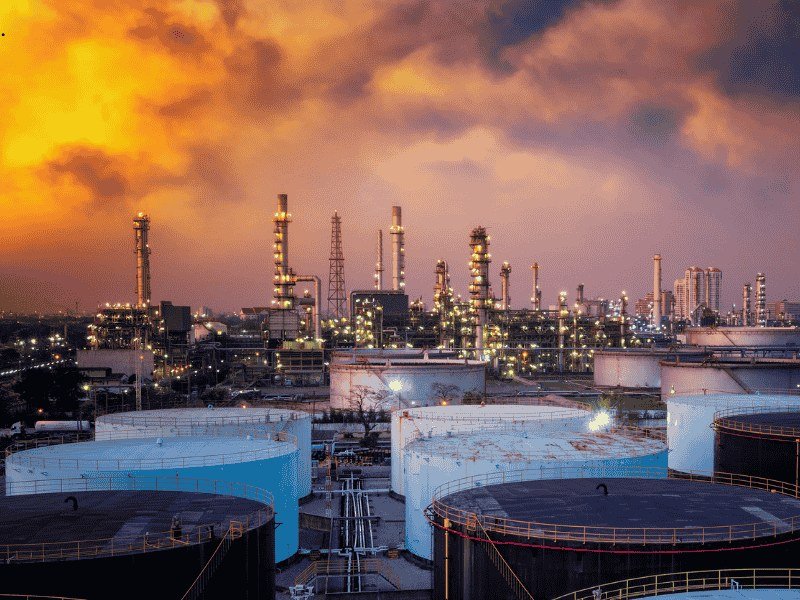
As demand for oil in Africa is anticipated to hit 4.5 million barrels per day (bpd) by 2050, the continent’s refining deficit has become glaringly apparent. Projections indicate that over $100 billion in investment is necessary to meet the expected growth in demand. While several significant refining projects are underway, securing financing remains a primary hurdle for these initiatives.
The Need for Regional Financing in Africa’s Oil Industry
Regional financing may offer a viable solution. Recently, Botswana’s Minister of Minerals and Energy, Bogolo Kenewendo, stated that following President Duma Boko’s meeting in Luanda, the country could acquire a 30% stake in the Lobito refinery in Angola, which is still under development. If this offer is accepted, it could signify a paradigm shift in how African nations approach fuel security and downstream investments.
Lobito Refinery: A Strategic Investment Opportunity
Once completed, the Lobito refinery will represent Angola’s largest operational facility, with a capacity of 200,000 bpd. The first phase is on track for completion in 2027 at a projected cost of $3.8 billion, although the national oil company Sonangol is seeking an additional $4.8 billion to complete it. While the company has approached Chinese lenders for support, Botswana’s potential investment introduces a fresh model based on regional cooperation rather than solely relying on outside capital.
For Angola, securing regional investment would not only bridge the financing gap but also establish long-term buyers for refined products. For Botswana, this strategy would diversify its petroleum imports, reducing reliance on South Africa and Namibia. Currently, refined petroleum is the second-largest import commodity for Botswana, and participating in the Lobito refinery could align incentives, transforming investors into long-term customers while ensuring refineries have consistent off-take agreements to enhance project viability.
Regional Joint Ventures: A Growing Trend in Southern Africa
The Botswana-Angola collaboration is not an isolated event. Across Southern Africa, nations are increasingly investigating joint refinery projects as a method to pool capital and mitigate risks. For instance, Botswana and Namibia are considering a $4 billion refinery project in Walvis Bay, targeting a capacity of 60,000 bpd to 100,000 bpd. Similarly, Mozambique’s Petromac has signed a memorandum of understanding with Nigeria’s Aiteo for the construction of Mozambique’s inaugural oil refinery.
These initiatives highlight a crucial reality: many African refineries face challenges attracting sufficient capital due to high initial costs, policy uncertainties, and relatively small domestic markets. Regional financing may provide a solution by broadening the customer base, enhancing economies of scale, and distributing financial risks across multiple countries.
Revitalizing Existing Facilities Through Regional Cooperation
The rationale for regional investment holds particular significance for underutilized refining assets across the continent. For example, South Africa’s SAPREF refinery has encountered both operational and financial challenges, especially at a time when the country heavily relies on imported fuels. This facility, the largest in South Africa at 180,000 bpd, has remained closed since 2022, with estimates indicating that around R100 billion (approximately $6 billion) is needed for its revival.
Investing regionally in such facilities would help to fill SAPREF’s financing void, bolster South Africa’s fuel resilience, and simultaneously strengthen fuel supply chains across neighboring nations. If Botswana moves forward with its stake in Lobito, it could set a transformative precedent for how Africa finances its downstream infrastructure. In a landscape characterized by geopolitical tensions, supply chain disruptions, and fluctuating fuel markets, Africa’s energy security may hinge not only on the construction of new refineries but also on fostering collaborative efforts to build them.
