

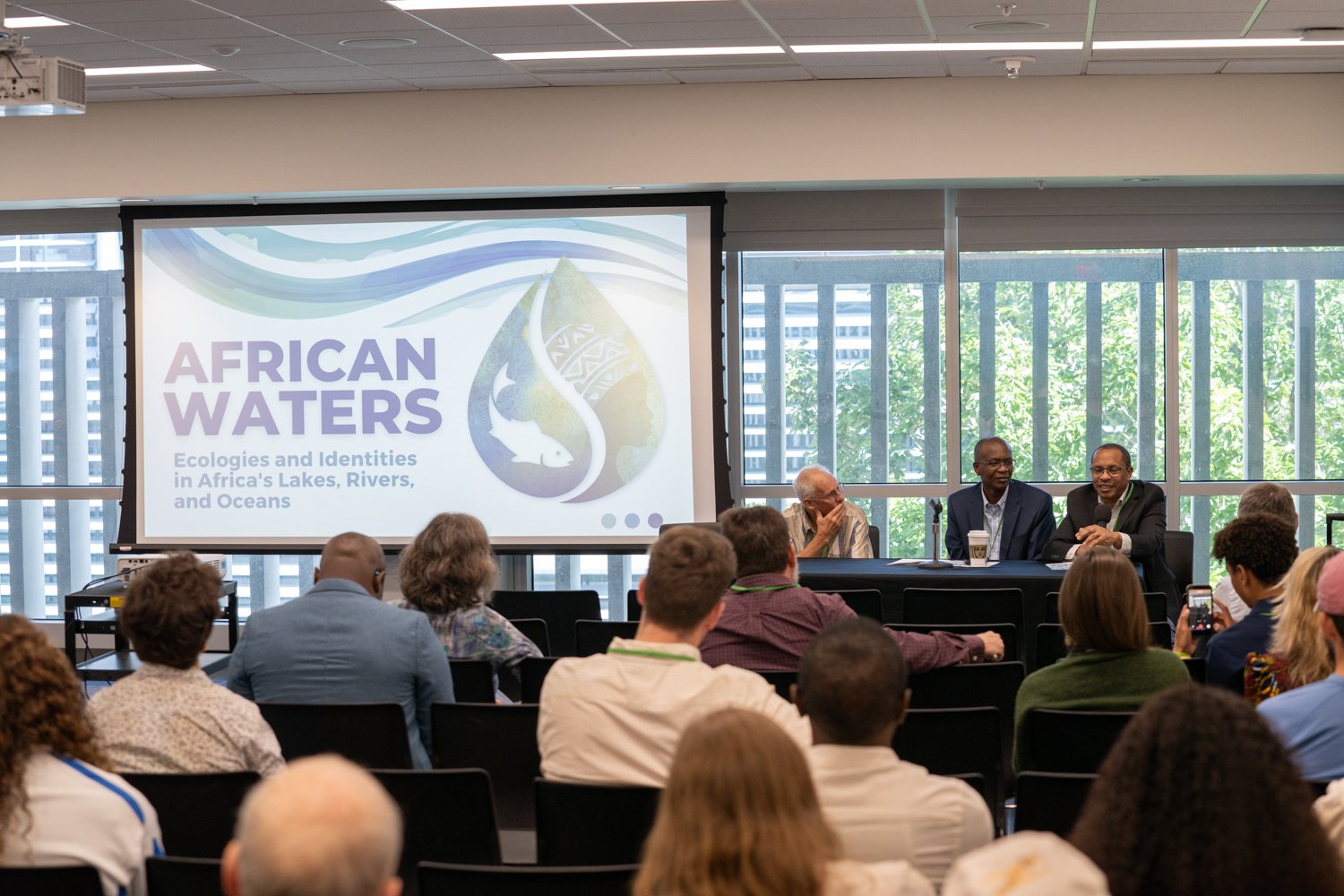
The Impact of African Waters Discussed at the 41st Gwendolen M. Carter Conference
The University of Florida’s Center for African Studies (CAS) recently hosted the 41st edition of the Gwendolen M. Carter Conference, convening experts from various disciplines to explore the crucial topic of African waters. Supported by the UF Water Institute, the conference brought speakers from Africa to Gainesville, reinforcing global perspectives while anchoring discussions in local expertise.
The Central Role of Water in Society and Politics
“As all this research shows, water is central to everything we do,” stated CAS Director and Professor of History Miles Larmer, Ph.D., one of the event’s co-convenors. “It’s also absolutely at the center of politics, society, cultures, and beliefs, and the conference’s focus on it shows how serious it is to everything we do.”
The Significance of Africa’s Water Bodies
Africa’s lakes, rivers, and seas are essential to the well-being of its ecosystems and human societies. However, this centrality often fails to translate into effective interdisciplinary approaches and analyses regarding the significance of water in African environments.

“Convening scholars from diverse disciplines is central to the Water Institute’s mission since water issues are inherently multifaceted,” explained Matt Cohen, Ph.D., director of the UF Water Institute. The conference aimed to intentionally foster interdisciplinary dialogue, as stated by Cohen: “That kind of space doesn’t happen organically—it takes deliberate design.”
Conference Highlights
This year’s two-day conference featured six panels with 17 speakers from across Florida, the U.S., and Africa. On April 2 and 3, researchers engaged in discussions about African waters at risk, the intersection of water and power, urban water management, sacred waters, and life in ecological balance.
“The attendees are already aware of the interdisciplinary nature of water resources, but integrating these perspectives can be challenging,” remarked Amanda Subalusky, Ph.D.. “The initial step is simply convening in one space to discuss central themes and witness diverse disciplinary approaches.”
Addressing Harmful Algal Blooms: A Wicked Problem
Kefa Otiso, Ph.D., a Geography Professor at Bowling Green State University, presented on the governance and food web implications of Lake Victoria’s Harmful Algal Blooms (HABs). He outlined the challenges these blooms pose, including socio-economic and ecological impacts, and highlighted the multifaceted nature of addressing such issues.

“HABs are not just environmental problems; they pose socio-economic and political challenges that require comprehensive solutions,” said Otiso. “These complex interactions necessitate a collective effort to alter mindsets, behaviors, and actions.”
Engaging the Next Generation
The conference also facilitated student dialogue through the “Voices from the Carter Conference: Africa Water Student Luncheon,” hosted by the UF Water Institute. This event was a collaborative effort with students from the Natural Resource Management in Africa Working Group, moderated by Ph.D. students Sam Howley and Joshua Benjamin.
The panel produced discussions about ethical research partnerships, interdisciplinary insights, and practical guidance for students aspiring to engage with water-related initiatives in Africa.
A Legacy of Scholarship
For over 40 years, CAS has organized lectures and conferences in memory of esteemed scholar Gwendolen M. Carter, who dedicated her career to advocacy and scholarship focused on politics of inequality and injustice, particularly in southern Africa. “This is our keynote conference, our major event every year,” noted Larmer, emphasizing its role in positioning the center at the forefront of global understanding of Africa.
This year’s event was collaboratively supported by several institutions, including the CAS, the UF Water Institute, the UF College of the Arts, and the Department of Biology, among others.
To learn more about the Center for African Studies, visit here.
