

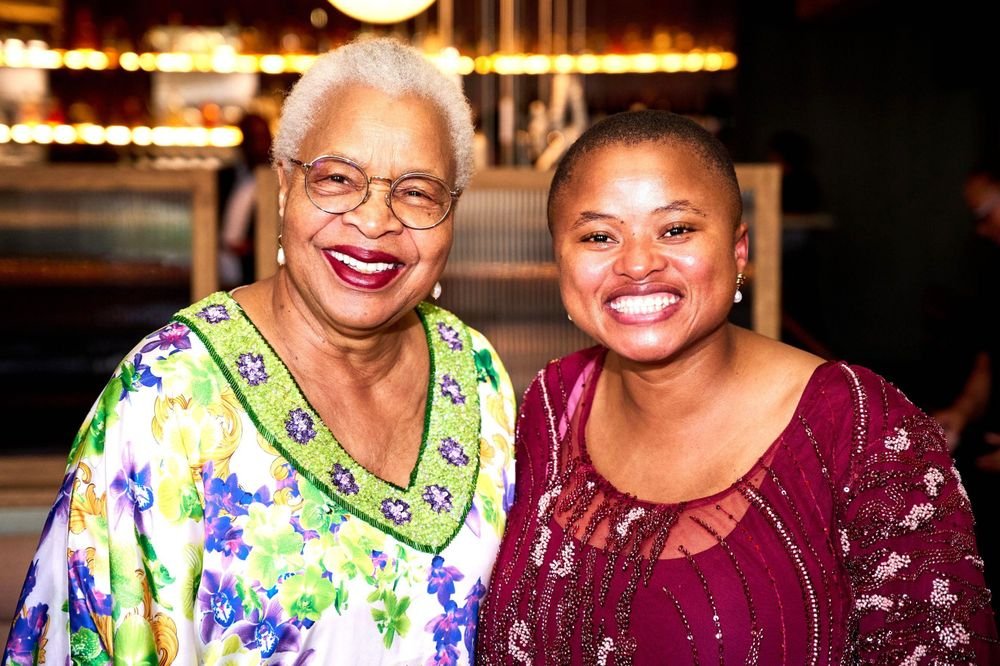
The conversation surrounding leadership is evolving, especially as global divisions and uncertainties become increasingly apparent. Recently, a thought-provoking dialogue took place between global humanitarian Graça Machel and Judy Sikuza, CEO of The Mandela Rhodes Foundation, igniting critical reflections on modern leadership paradigms.
This insightful discussion, available as a podcast on The Mandela Rhodes Foundation’s website, emphasizes that leadership transcends merely holding a position; it is fundamentally about service. Machel challenges conventional authority notions, advocating for a more human-centered approach to leadership.
A Shift from Power to People
Machel points out a growing disconnection between leadership and the needs of the people, warning against treating communities merely as markets. This shift, she argues, risks eroding the moral foundations of leadership.
Reframing leadership as a commitment to human lives can redefine success for institutions, reshape governmental policies, and re-evaluate economic growth metrics.
Leadership for a Changing World
These reflections resonate with findings from the World Economic Forum Global Future Council on Leadership, whose recent white paper titled Next Generation Leadership for a World in Transformation: Driving Dialogue and Action echoes the call for leadership practices grounded in equity, empathy, and interdependence.
Highlighting the teachings of Nelson Mandela, Machel underscores that true leadership is not about self-promotion; it is about empowering others. She reiterates that ethical, collective, and human-centered leadership is essential, particularly across generations.
From ‘Next Generation’ to Shared Leadership
A pivotal theme in the conversation revolves around rethinking intergenerational leadership models. Machel and Sikuza propose a shared approach, where current and future leaders collaborate and learn side by side.
Rather than labeling young individuals as ‘leaders of tomorrow,’ Machel emphasizes the urgency for a ‘now generation’ of leaders who are empowered and expected to take on responsibilities today. This approach not only fosters immediate action but also encourages collaborations across generational divides.
Reclaiming Humanity in Leadership
The essence of the dialogue emphasizes that leadership must prioritize humanity before systems. In an increasingly divided world, leadership should focus on care, compassion, and community-building to restore trust and unity.
By invoking the philosophy of Ubuntu—which fosters an understanding of our interconnectedness—Machel positions leadership as a practice rooted in empathy and shared responsibility, rather than merely a title.
From Ideas to Action
Today’s young leaders are equipped with global insights, innovative technologies, and diverse perspectives. However, they often face barriers regarding access to decision-making platforms and the authority to challenge outdated systems.
Effective leadership in Africa requires adapting international practices to local contexts, creating a generation of leaders adept at thinking globally while acting locally and fostering regional collaborations.
A Call to Action
As global complexities intensify, the expectation for proactive leadership is clearer than ever—leadership must now be authentic, engaged, and intentional. Sikuza aptly states, ‘We don’t need leaders in waiting; we need leaders in action.’
Leadership is a responsibility that must be embraced with humility and a deep commitment to fostering a brighter future for all.
