

Exploring Africa’s Mineral Landscape: A Pillar for Economic Transformation
Africa’s subsurface wealth serves as a vital foundation for initiatives aimed at revitalizing the continent through mining. With approximately 30% of the world’s proven mineral reserves, Africa offers unparalleled economic opportunities through strategic partnerships focused on resource development.
Understanding Africa’s Strategic Resource Position
The availability of resources is crucial for economic transformation on each continent, yet few regions enjoy the geological advantages that Africa does. The continent’s minerals range from traditional precious metals to critical minerals essential for modern technology and renewable energy infrastructure.
Continental Mineral Wealth Distribution and Global Market Share
The Democratic Republic of Congo (DRC) stands out in global cobalt production, supplying about 70% of the world’s output, according to the United States Geological Survey. This concentration in the supply chain represents both potential and challenges as the demand for electric vehicle batteries rises.
Furthermore, South Africa boasts roughly 80% of global platinum reserves while producing around 70% of annual output. These metals are crucial for applications in catalytic converters and clean energy technologies.
Additionally, lithium deposits found in Zimbabwe, Namibia, and South Africa indicate emerging opportunities in the battery metals market. Although Africa’s current lithium production is modest compared to South America, future expansion is likely, with a projected 40-fold increase in demand by 2040 under net-zero scenarios.
Critical Minerals for Energy Transition
The manufacturing requirements for batteries are driving unprecedented demand for specific mineral combinations found abundantly in Africa. Cobalt extraction from DRC’s copper mining operations delivers 70% of global supply, ensuring strategic importance for electric vehicle manufacturers.
The International Energy Agency anticipates significant increases in critical mineral demand through 2040, particularly for lithium. Current African lithium projects have the potential to reshape global supply chains and diminish reliance on major producers.
Key African Critical Mineral Positions:
- Cobalt: 70% of global production concentrated in the DRC
- Platinum: 70% of global production from South Africa
- Lithium: Emerging production from Zimbabwe and Namibia
- Copper: Significant reserves in the Central African Copperbelt
- Manganese: Extensive deposits in South Africa and Ghana
Resource Curse vs. Resource Blessing Framework
Historically, the outcomes for resource-rich nations that develop extraction industries without comprehensive strategies have been mixed. The phenomenon known as the resource curse displays how mineral wealth can paradoxically inhibit economic growth. Successful models require strategic policy coordination in regulatory certainty, infrastructure, and human capital development.
Zambian President Hichilema’s approach exemplifies modern strategies focused on mining revitalization in Africa, emphasizing transparency, regulatory stability, and tech deployment to foster sustainable growth. These principles align with broader economic development initiatives aiming for resource-led transformation.
Building Effective Mining Partnerships in Africa
The partnerships between government authorities, international investors, and local communities play a critical role in determining whether mineral extraction generates widespread economic development or remains a limited enclave activity. Successful partnerships must establish comprehensive frameworks that address regulatory clarity, community engagement, and sustainable development goals.
Government-Industry Collaboration Models
Creating an optimal regulatory framework involves balancing investor confidence with national aspirations. Effective models create clear, consistent guidelines for exploration, production licensing, taxation, and environmental compliance.
Regulatory Framework Components:
- Exploration Licensing: Transparent allocation processes
- Production Permits: Clear pathways from exploration to operation
- Taxation Structures: Predictable frameworks
- Environmental Standards: Consistent compliance requirements
- Dispute Resolution: Mechanisms for addressing concerns
Tax policies must simultaneously generate significant revenue for governments while remaining attractive to investors. Infrastructure investments, particularly in shared energy and transport systems, can foster regional economic development.
How Do Infrastructure Gaps Impact Mining Revitalization Efforts?
Physical infrastructure constraints are significant barriers to mining development in Africa. Issues such as inadequate power supplies and transportation networks drive up operational costs and restrict scaling opportunities. However, the integration of innovative solutions can pave the way for sustainable development.
Energy Security Challenges
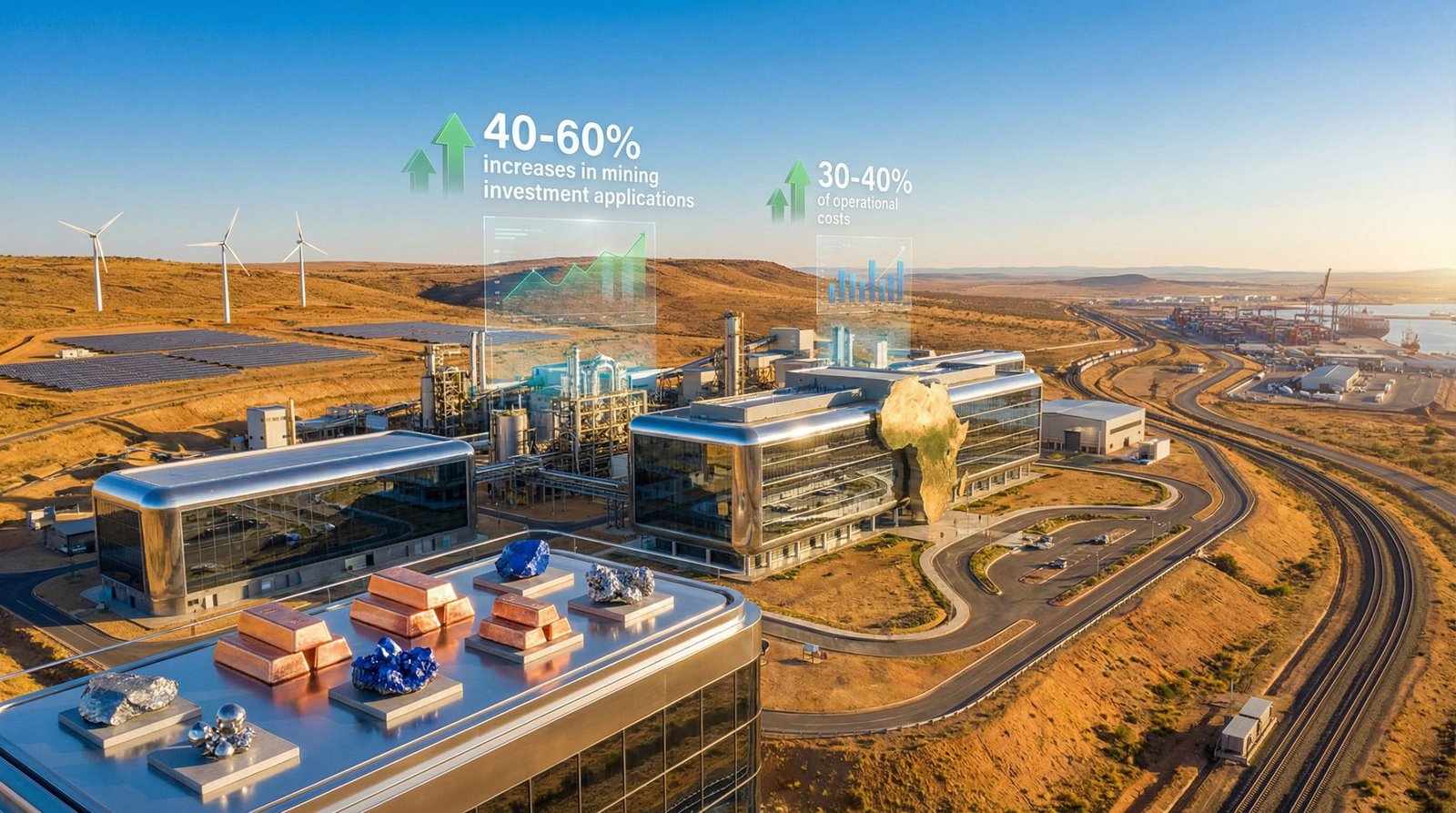
Reliability in energy supply critically impacts mining operational costs, as energy expenses can account for 30-40% of total production costs. Many operations resort to expensive diesel generation due to limited grid connectivity.
| Infrastructure Component | Impact on Mining Costs | Partnership Opportunities |
|---|---|---|
| Energy Supply | 30-40% of operational costs | Public-private renewable projects |
| Transport Networks | 15-25% of total costs | Corridor development initiatives |
| Water Systems | 10-15% of operational costs | Shared infrastructure development |
Renewable energy integration can lead to long-term cost reductions and facilitate multiple mining operations through shared infrastructure development.
What Role Does Technology Play in African Mining Transformation?
Technological advancements are reshaping mining economics through automation, digital exploration tools, and sustainable practices that reduce costs while improving environmental impact. The mining sector must engage in a digital transformation to enhance efficiency and safety.
Digital Innovation Adoption
Innovative technologies, such as artificial intelligence and remote monitoring systems, are enhancing operational efficiency. These can accelerate discovery timelines, reduce downtime, and provide real-time data for operational insights.
Digital Technology Applications:
- AI-Powered Exploration: Enhanced modeling and target identification
- Autonomous Equipment: Remote-operated systems
- Predictive Maintenance: Real-time monitoring to reduce downtime
- Digital Twin Technology: Virtual models for operational optimization
- IoT Sensor Networks: Comprehensive data collection and analysis
How Can Value Addition Transform Raw Material Exports?
Investing in downstream processing capabilities allows African countries to capture more value from their mineral extraction while fostering local manufacturing industries that create jobs and expertise. Special Economic Zones can facilitate the development of processing industries.
Processing Development Framework:
- Special Economic Zones: Integrated infrastructure for mineral processing
- Technology Transfer: Knowledge-sharing requirements in mining licenses
- Regional Integration: Cross-border development initiatives
- Skills Development: Alignment with processing industry needs
- Quality Standards: International certifications to boost market access
Looking Ahead: Investment Climate Improvements Needed
Enhancements to the investment climate entail comprehensive reforms in regulatory frameworks, financial sector development, and institutional capacity building to assure investors that national development goals will be prioritized.
Regulatory Certainty Measures
Standardized mining codes can streamline regulatory processes, reducing compliance complexity across multiple nations. Moreover, dispute resolution mechanisms provide a balanced approach to addressing international investor concerns.
Regulatory Framework Elements:
- Mining Code Harmonization: Regional standardization
- Dispute Resolution: Efficient international arbitration mechanisms
- Environmental Standards: Clear requirements across jurisdictions
The Significance of Regional Partnerships
Cross-border collaboration can enable resource sharing, infrastructure development, and market integration—benefits that countries cannot achieve on their own.
Cross-Border Collaboration Models:
- Infrastructure Sharing: Cross-national transport and power development
- Regulatory Harmonization: Standardized codes and compliance rules
- Joint Exploration: Shared geological surveys and technical expertise
Environmental and Social Governance Priorities
Adopting ESG frameworks is crucial for ensuring that mining operations maintain community support while adhering to sustainability standards.
Climate Change Adaptation Strategies:
- Water Management: Efficient recycling and alternative source development
- Infrastructure Resilience: Designing to withstand climate effects
- Carbon Offsetting: Integrative environmental restoration and conservation efforts
Conclusion: How Mining Can Drive Broader Economic Transformation
When integrated effectively with broader industrial strategies, the mining sector can create multiplier effects throughout national economies. The development of forward, backward, and fiscal linkages can maximize economic benefits, leading to construction, education, and health sector advancements.
Linkage Development Strategies:
- Forward Linkages: Manufacturing and processing industries using mining outputs
- Backward Linkages: Local equipment supply and services
- Fiscal Linkages: Revenue allocation for broader economic growth
Future Outlook
Changes in global demographics, technological advancements, and climate requirements present both challenges and opportunities for Africa’s mining sector. By embracing these trends, stakeholders can position the continent as a key player in global supply chains, particularly for critical minerals.
Future Development Scenarios:
- Energy Transition Acceleration
- Supply Chain Diversification
- Technology Integration
- Enhanced ESG Standards
With comprehensive strategies for monitoring and enhancing partnerships, the African mining sector is poised for a sustainable and transformative future.
