

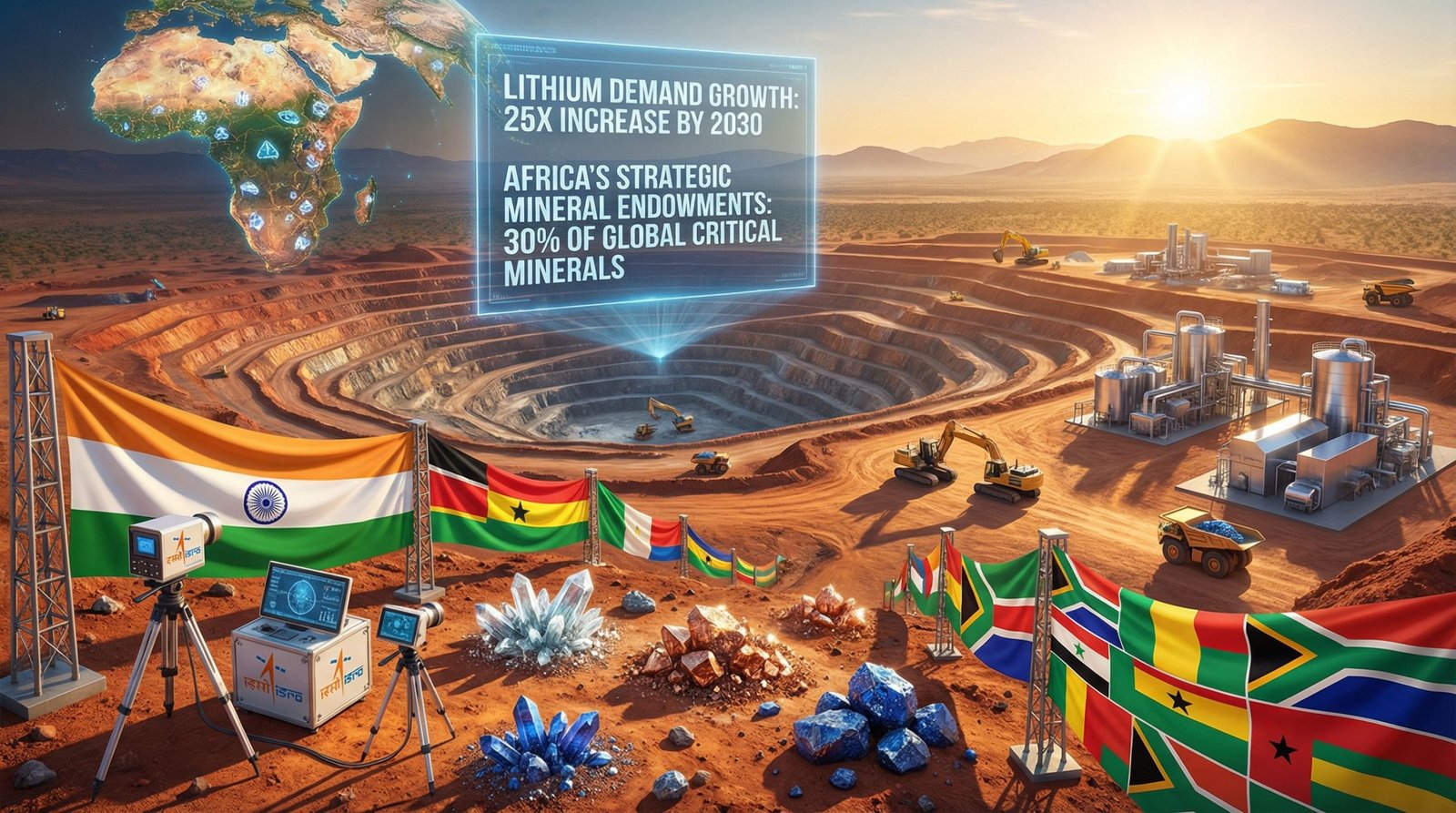
India’s Evolving Mineral Diplomacy with Africa: A New Era for Critical Minerals Supply Chains
India’s proactive mineral diplomacy with African nations signifies a transformative approach towards securing essential resources in an increasingly complex geopolitical landscape. With a robust critical minerals strategy, India aims to forge sophisticated partnerships that not only address immediate resource needs but also enhance long-term technological sovereignty. This initiative arises in response to revealed vulnerabilities within mineral supply chains, which are vital for constructing renewable energy infrastructure.
The Shift in Energy Security Models
Historically, energy security focused on petroleum logistics and shipping route diversification; however, these frameworks falter in the context of the critical minerals ecosystem essential for renewable energy. Supply chain disruptions, tech transitions, and geopolitical strife push nations to rethink conventional commodity procurement strategies, evolving into a paradigm where diversified sourcing isn’t enough.
India’s strategic positioning resonates with the broader dynamics of South-South cooperation, as developing countries increasingly seek alternatives to traditional resource extraction partnerships. The critical minerals sector poses unique challenges. It impacts not only raw material accessibility but also critical technological sovereignty, manufacturing capabilities, and energy transition security timelines.
Understanding Strategic Vulnerabilities
Supply Chain Concentration Risks
China’s substantial dominance across various critical mineral supply chains creates substantial vulnerabilities for nations, including India, striving for ambitious renewable energy targets. This dominance particularly impacts lithium, rare earth refining, and battery-grade mineral production. Unlike traditional commodity markets, the critical minerals space is marked by concentrated processing capabilities, posing greater strategic challenges than merely reserve concentration.
Recent disruptions in supply chains highlight the cascading effects of concentrated processing facilities on global manufacturing networks. For India, such disruptions underscore the deficiencies of relying solely on diversified sourcing routes when the underlying concentration of supply remains unchanged.
India’s Rising Demand for Critical Minerals
India’s targets for renewable energy signal a robust increase in the consumption of critical minerals, necessitating a departure from traditional import relationships. The rapid expansion of battery manufacturing, grid-scale storage, and electric vehicle adoption calls for long-term security in supply chains rather than short-term transactional procurement.
| Projected Critical Minerals Requirements (2035): | Mineral Category | Current Demand | 2030 Projection | 2035 Projection | Primary Applications |
|---|---|---|---|---|---|
| Lithium Compounds | Minimal | 25X current levels | 40X current levels | EV batteries, grid storage | |
| Battery-grade Cobalt | Limited | 15X increase | 25X increase | Cathode materials | |
| Rare Earth Elements | 5,000 tonnes/year | 40,000 tonnes/year | 65,000 tonnes/year | Wind turbines, solar panels | |
| High-grade Copper | 4.5 million tonnes | 7.6 million tonnes | 9.2 million tonnes | Grid infrastructure |
These projections reflect not just the domestic consumption growth but also India’s ambition to emerge as a regional manufacturing hub for renewable energy technologies.
Africa’s Mineral Opportunities
Africa boasts approximately 30% of global critical mineral reserves, yet the continent’s processing capabilities are still underdeveloped. This gap results in expansive opportunities for partnerships thriving on integrated value chain development rather than traditional extraction-centric agreements. The diverse geological potentials across various African regions, such as Zimbabwe’s lithium triangles, Zambia’s copper belt, and Tanzania’s selection of minerals, present unique partnership models tailored to regional and strategic needs.
India’s Value-Creation Partnership Model
Technology Transfer
India’s strategy prioritizes building institutional capacity rather than engaging in simple commodity purchase agreements. By focusing on technology transfer, India aids partner countries in developing their technical capabilities, hence reducing long-term dependencies. The Geological Survey of India, for instance, is deploying its expertise in African operations, including a 9,000 square kilometer geological mapping project in Zambia. This initiative not only boosts immediate mining developments but also strengthens long-term resource strategies.
Three-Tier Engagement Structure
India’s partnership framework is designed with distinct layers to foster mineral supply chain development:
Government-to-Government Framework:
- Bilateral exploration rights agreements
- Regulatory harmonization
- Environmental standards alignment
Public-Private Joint Ventures:
- Development of processing facilities
- Optimizing logistics networks
- Workforce training programs
Academic-Industry Collaboration:
- Partnerships with research institutes
- Skills development initiatives
- Establishing innovation centers
This multi-tiered approach ensures comprehensive engagement, addressing varied timeframes and risk profiles.
Integrating ESG Standards
Environmental and Social Governance (ESG) standards are increasingly pivotal as the global mining landscape becomes more sustainability-focused. India’s commitment to community-centric mining practices fosters preferred access in jurisdictions that prioritize local value creation and environmental stewardship.
Strategic Country Assessments
Zambia’s Copper-Cobalt Opportunities
Zambia sits within the Central African Copperbelt, providing crucial copper-cobalt deposits for battery cathodes. The nation’s existing mining infrastructure offers vast expansion potential, supported by advanced technology upgrades.
Zimbabwe’s Lithium Development
Zimbabwe’s lithium resources present essential access to battery-grade materials. The regulatory environment prioritizes local value addition and community benefits—aligning perfectly with India’s capacity-building focus.
Tanzania’s Diversified Mineral Portfolio
Tanzania’s array of critical minerals, including nickel and rare earths, ensures supply security while minimizing risks associated with single-commodity operations.
Enhancing Diplomatic Frameworks
Timeline of Diplomatic Engagement:
- 2015: Establishment of India-Africa Summit for cooperation frameworks
- 2023: Initiation of critical minerals strategic assessments
- 2025: Expansion of high-level diplomatic engagements
- 2026: Negotiations for bilateral mining agreements
Investment Opportunities
Innovative Public-Private Partnerships
Joint ventures between Indian and African enterprises facilitate shared risk, aligning policy objectives with commercial viability. Infrastructure financing can benefit from blended finance mechanisms, ensuring sustainable development in mineral supply chains.
Value Chain Integration
Downstream processing capabilities within Africa would capture greater value from mineral extraction, fostering regional manufacturing hubs for battery production and renewable energy technologies.
Conclusion
India’s critical minerals diplomacy in Africa is set to redefine global mineral markets, emphasizing sustainability, technological advancement, and mutual growth. By prioritizing comprehensive partnerships, India positions itself at the forefront of global critical mineral supply chains, creating templates for future cooperation among developing nations.
For more insights on emergent market trends and investment opportunities, stay updated on our latest analyses.
