

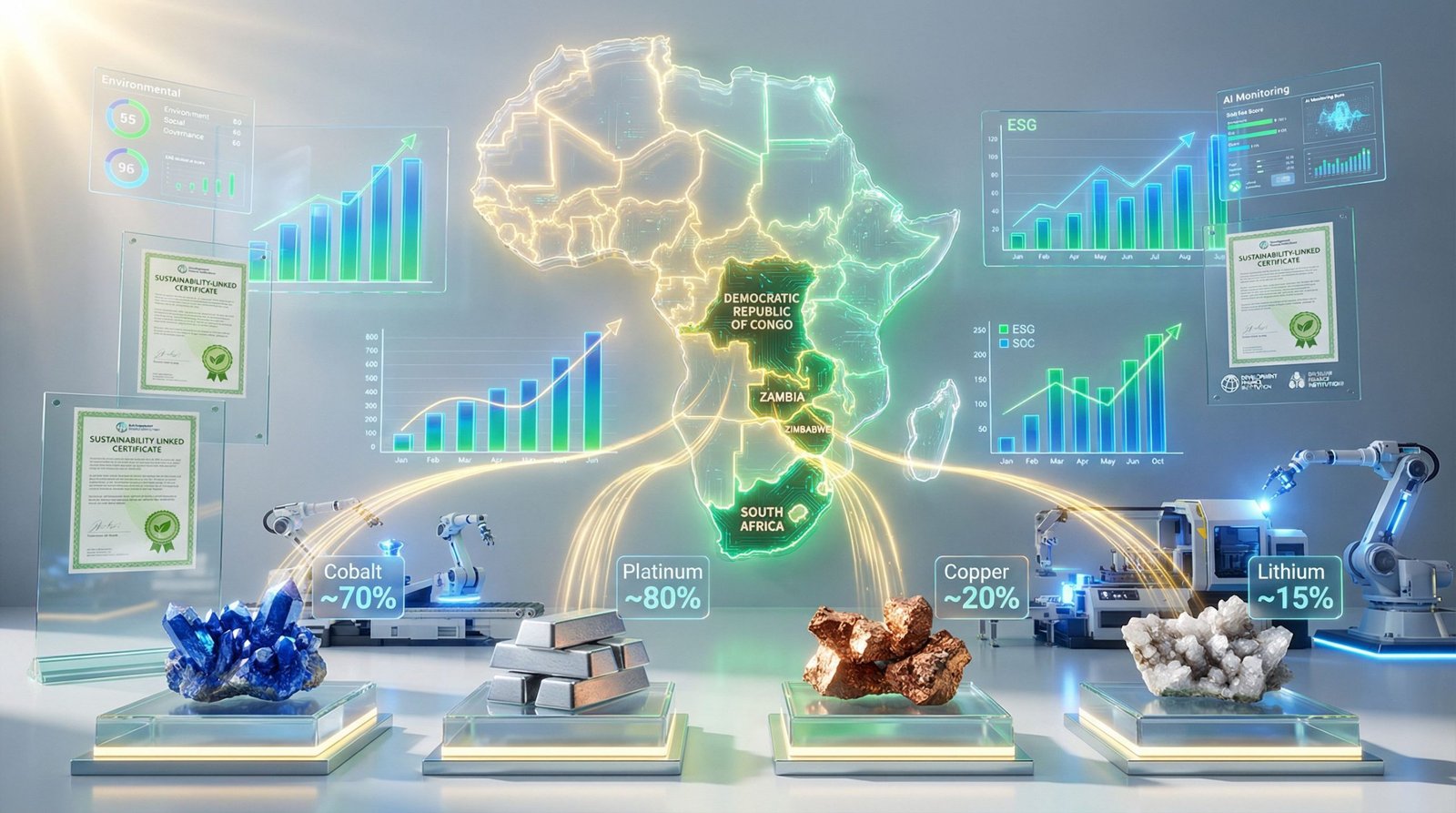
Sustainable investment in African mining is experiencing a significant evolution. Instead of prioritizing short-term extraction, capital allocation decisions are now guided by advanced risk-return frameworks that emphasize long-term sustainability. This transformation highlights the increasing recognition among institutional investors that environmental, social, and governance (ESG) factors are intimately linked to both operational resilience and financial performance. This shift is particularly evident as mining evolution trends reshape the industry landscape.
The rise of impact investing is leading to a new paradigm where mining projects are assessed not just for their geological potential but also for their capacity to yield significant development outcomes while remaining commercially viable. This represents a move from conventional resource extraction to integrated value creation models.
Capital Allocation Frameworks in Modern Mining Investment
Institutional investors have significantly revamped their strategy towards African mining opportunities, incorporating comprehensive ESG evaluation alongside traditional geological and financial metrics. This change reflects the growing understanding that sustainable practices can mitigate operational risks, enhance stakeholder relations, and ensure better regulatory compliance.
Development finance institutions are now using blended finance mechanisms that merge commercial investment with patient development funding. Such structures lower risk premiums for private investors while ensuring that projects provide broader economic advantages beyond mere financial gains.
Key Risk Mitigation Factors:
- Community engagement programs to minimize operational disruptions
- Environmental management systems for reducing regulatory intervention risks
- Transparent governance structures attracting premium institutional capital
- Local capacity-building initiatives that promote operational sustainability
The approach of the International Finance Corporation to metals and mining investments showcases this evolution, emphasizing project evaluation frameworks that assess both financial feasibility and developmental impact. Such methodologies recognize that mining operations contributing to genuine economic development attract more stable capital inflows. Furthermore, understanding investment risk flags becomes essential in assessing management teams and operational strategies.
Strategic Mineral Resources and Global Supply Chain Integration
Africa holds a crucial position in the global mineral landscape, providing about 30 percent of the world’s mineral resources. This includes extensive reserves of energy transition minerals vital for technologies like batteries, renewable energy systems, and hydrogen production.
| Metal | Africa’s Production Share | Primary Producing Countries | Strategic Application |
|---|---|---|---|
| Cobalt | ~70% | DRC, Zambia | Electric vehicle batteries |
| Platinum | ~80% | South Africa, Zimbabwe | Hydrogen fuel cells |
| Copper | ~20% | Zambia, DRC, South Africa | Renewable energy infrastructure |
| Lithium | ~15% | Zimbabwe, Ghana | Energy storage systems |
The strategic importance of these minerals fosters appealing investment narratives for institutions looking to capitalize on decarbonization trends. Mining projects integrated into critical mineral supply chains receive increased valuations due to their pivotal role in energy transition infrastructure development. A robust critical minerals strategy is essential for achieving long-term sustainable investment success.
Supply Chain Security Considerations:
- Concentration risks associated with single-country dependencies
- Infrastructure needs for efficient material transport
- Processing capabilities and downstream integration potential
- Geopolitical stability issues impacting long-term supply security
Investment flows are increasingly favoring projects that can demonstrate secure supply chain integration with established downstream buyers, especially in the electric vehicle and renewable energy sectors.
Governance and Regulatory Framework Impact on Investment Returns
Regulatory certainty has become a vital factor influencing capital allocation, with investors systematically evaluating governmental capacities, institutional quality, and policy consistency while looking at African mining prospects. Regions with stable mining codes and transparent fiscal environments can attract capital at significantly lower risk premiums.
The relationship between institutional quality and investment flow underscores investors’ recognition that strong governance frameworks can reduce project timelines and operational uncertainties. Comprehensive due diligence now accounts for judicial independence, bureaucratic efficiency, and regulatory consistency, in addition to traditional project economics.
Institutional Quality Metrics:
- Mining code reliability and amendment frequency
- Regulatory approval timelines and transparency
- Fiscal regime predictability and competitive advantage
- Dispute resolution mechanisms and consistency in enforcement
Investment decisions increasingly consider governance risk premiums, ensuring that projects in jurisdictions with higher institutional capacity receive better valuations and financing terms. This trend highlights the importance of policy stability in attracting long-term development capital for sustainable African mining ventures.
Mining operations that implement sophisticated environmental management systems and emissions reduction technologies are attracting premium valuations from environmentally conscious institutional investors. The incorporation of renewable energy solutions and low-carbon mining practices is rapidly becoming a competitive edge in global commodity markets.
Projects that excel in environmental impact mitigation can attract specialized sustainable finance options, including green bonds and sustainability-linked financing mechanisms. These financial instruments often come with reduced borrowing costs for environmentally compliant operations and provide access to dedicated pools of sustainable capital. Furthermore, sustainable mining practices are increasingly significant for drawing international investments.
Environmental Value Creation Strategies:
- Integration of renewable energy to cut operational carbon footprints
- Advanced waste management and tailings reprocessing systems
- Water conservation and biodiversity protection initiatives
- Circular economy principles that include waste monetization
Emphasis on environmental performance reflects investors’ awareness that superior practices reduce regulatory risks and enhance operational efficiency. Mining companies that can demonstrate measurable emissions reductions consistently attract higher investment multiples.
Local Value Creation and Economic Development Impact
Investment valuations are increasingly factoring in local economic impacts and opportunities for value-added processing. Projects that involve downstream beneficiation and local supply chain development are assigned higher valuations for their potential to foster sustained economic development beyond simply extracting raw materials.
Development finance institutions aim to fund projects with multiplier effects derived from shared infrastructure, skills transfer, and community employment generation. Such initiatives exhibit greater political sustainability and community support, which in turn mitigate long-term operational risks.
Value Creation Mechanisms:
- Downstream processing and beneficiation capabilities
- Local procurement and supplier development programs
- Skill enhancement and technology transfer initiatives
- Infrastructure-sharing agreements benefiting larger communities
The integration of local value creation strategies is critical for securing both development finance and commercial investments, as investors acknowledge that projects providing broader economic benefits are likely to enjoy greater political and social stability.
Innovation in Mining Finance and Capital Structure
The evolution of mining finance has introduced innovative capital structure models that merge commercial returns with developmental outcomes. Blended finance arrangements involving development finance institutions, commercial banks, and impact investors are becoming increasingly adept at de-risking large-scale mining projects.
Advanced Financing Mechanisms:
- Development finance involvement lowers commercial investor risk exposure
- Government co-investment frameworks assure regulatory stability
- Impact investor capital provides patient funding for social outcomes
- Sustainability-linked pricing adjusts borrowing costs based on performance
These structures enable mining initiatives to tap into a diversity of capital sources while catering to varying investor demands for financial returns, developmental impact, and risk mitigation. The sophistication of these arrangements illustrates the evolution of sustainable investment within the African mining sector as a unique investment category.
Technology Integration and Operational Excellence
The adoption of advanced technology has become crucial in investment decision-making, where digital mining solutions, artificial intelligence applications, and automated systems yield operational efficiencies that improve project economics while minimizing environmental impacts. Consequently, AI in mining operations has become a pivotal factor for attracting modern investment capital.
Precision mining technologies that enable selective extraction and optimize resources extend mine lifespans while improving resource usage efficiency. Such capabilities are increasingly valuable given the global decline in ore grades, making African projects equipped with advanced technology integration particularly appealing to investors.
Technology-Driven Value Creation:
- Real-time monitoring systems for optimizing extraction processes
- Automated equipment to lower labor costs and safety hazards
- Predictive maintenance systems to reduce operational interruptions
- Data analytics platforms that enhance resource recovery rates
Investment patterns are shifting towards mining operations that demonstrate technological innovation capabilities, as advanced technology integration offers sustainable competitive advantages in increasingly challenging operational environments. Furthermore, responsible mining initiatives are gaining traction as investors prioritize ethically sound operations.
Future Investment Trends and Market Evolution
The future of African mining investment is increasingly oriented toward integrated operations that capture value across the mineral supply chain. Downstream integration opportunities, particularly in battery material manufacturing and clean energy infrastructure components, attract premium valuations from investors eager to engage with energy transition growth markets.
Circular economy principles are becoming central to investment evaluations, with projects that encompass waste reprocessing, tailings reuse, and resource recovery generating additional revenue streams and lowering environmental liabilities. These strategies are appealing to sustainability-focused investors targeting innovative business models.
Emerging Investment Themes:
- Battery materials processing and supply chain integration
- Renewable energy infrastructure metal production
- Waste reprocessing and applications within the circular economy
- Carbon-neutral mining operations and emissions offsetting
The interplay of sustainability requirements, technological advancements, and developmental impact metrics has created a sophisticated investment landscape where successful projects must excel across multiple performance dimensions.
Risk Assessment and Due Diligence Evolution
Contemporary mining investment requires a comprehensive, multi-faceted risk assessment that integrates traditional geological analysis with detailed ESG evaluations. Investors have developed advanced frameworks to assess community relations, environmental management capabilities, and governance structures as essential investment criteria.
The incorporation of development impact measurement into investment evaluations reflects a growing awareness that projects yielding measurable social and economic benefits achieve enhanced operational stability and stakeholder support. This approach prioritizes long-term value creation over short-term extraction practices.
Comprehensive Due Diligence Framework:
- Geological resource evaluation and reserve validation
- Environmental impact assessment and mitigation planning
- Community engagement analysis and social license evaluation
- Governance structure review and institutional capacity evaluation
- Assessment of economic development impact and monitoring systems
Success in African mining investment increasingly relies on demonstrating a harmonious alignment between commercial returns, sustainability performance, and tangible developmental outcomes. This transition reflects a maturation of responsible investment practices within the sector, marking recognition that sustainable practices translate into superior risk-adjusted returns through improved stakeholder engagement and operational robustness.
Please note: Investment decisions should always be made based on thorough due diligence and professional guidance. The mining sector carries significant risks, and previous performance does not guarantee future outcomes. Regulatory systems and market conditions may evolve, affecting investment results.
Looking to Identify the Next Major Mineral Discovery?
Discover how Discovery Alert’s proprietary Discovery IQ model provides real-time alerts on significant ASX mineral discoveries, turning complex exploration data into actionable investment opportunities. Explore Discovery Alert’s historic discoveries to understand how major finds can lead to substantial returns, then start your 14-day free trial to position yourself advantageously in the market.
