

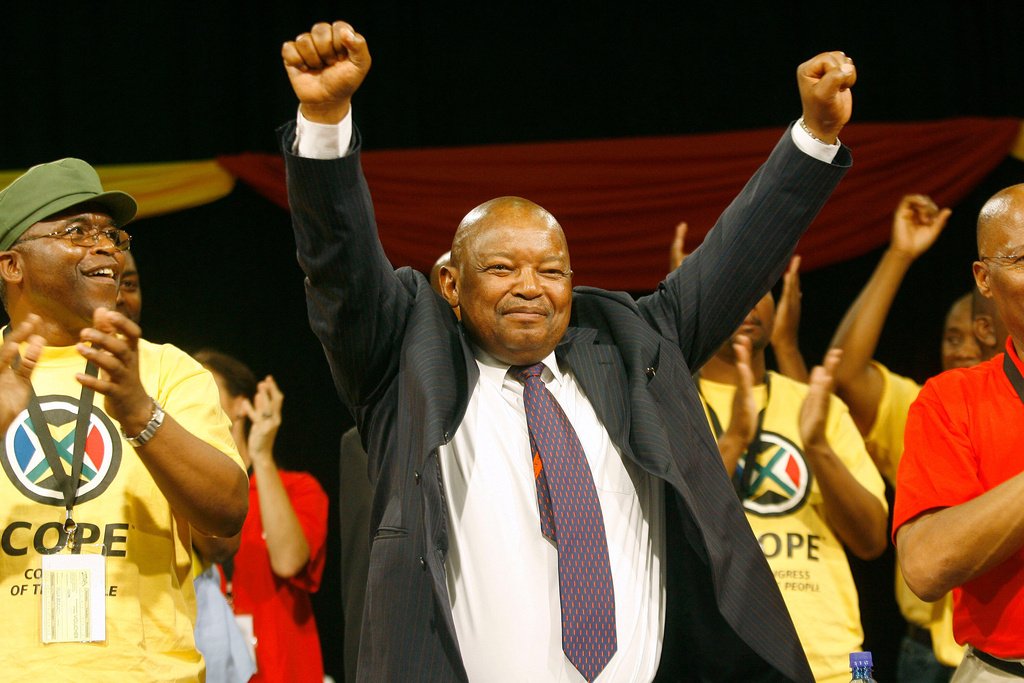
Mosiuoa “Terror” Lekota: A Pillar of South African Anti-Apartheid Struggle Passes Away
JOHANNESBURG — The South African political landscape mourns the loss of Mosiuoa “Terror” Lekota, a veteran anti-apartheid activist and former defense minister, who passed away at the age of 77 following a lengthy illness, as announced by his political party on Wednesday.
A Life Dedicated to the Fight Against Apartheid
Lekota was a significant figure in the movement against white minority rule in South Africa. He spent eight years incarcerated on Robben Island, where he shared a cell with prominent anti-apartheid leaders, including Nelson Mandela, from 1974 until his release in 1982. Lekota’s dedication to the cause did not wane after his release; he was imprisoned again for continuing his activism against the apartheid regime.
Ministerial Role and Political Evolution
From 1999 to 2008, Lekota served as South Africa’s Minister of Defense, playing a pivotal role in the new democratic government formed after the country held its first free elections in 1994. He also held the position of national chairperson of the African National Congress (ANC) during these transformative years.
However, the tides turned following former President Thabo Mbeki’s removal in 2008, which strained Lekota’s relationship with the ANC as Jacob Zuma took the helm of both the ANC and the presidency.
Formation of the Congress of the People (COPE)
In response to his discontent with the ANC, Lekota founded the Congress of the People (COPE) in 2008. This breakaway faction contested the 2009 elections, emerging as the third-largest political party in South Africa, securing over 7% of the national vote and 30 seats in the 400-member parliament. This shift marked a notable decline in ANC support, prompting many former ANC officials to join Lekota’s new party.
The political landscape shifted further in 2024 when the ANC lost its outright majority for the first time, resulting in the emergence of a coalition government.
Decline of COPE and Retirement from Politics
Despite initial successes, COPE soon faced internal struggles that contributed to its gradual decline. The party failed to secure any parliamentary seats in the 2024 general elections, effectively marking the end of Lekota’s career as a lawmaker. By 2025, due to health concerns, Lekota stepped back from the political arena, leading to the appointment of an acting leader to fill his role.
Recognitions and Tributes
Lekota’s contributions to South African politics have been acknowledged broadly. Bantu Holomisa, the leader of the opposition United Democratic Movement and South Africa’s deputy minister of defense, stated, "He decided to leave the ANC and formed COPE with other South Africans, strengthening the voice of the opposition parties."
Holomisa emphasized Lekota’s understanding of the original agenda of the struggle, illustrating the profound impacts he had on the anti-apartheid movement and beyond.
As tributes continue to flow from various political factions across South Africa, Mosiuoa “Terror” Lekota’s legacy as a champion for democracy and justice remains indelible in the nation’s history.
For further insights into South Africa’s political evolution, visit Al Jazeera.
Related Articles:
