

TThe global mining industry is currently facing a myriad of challenges, primarily influenced by economic uncertainties, supply chain disruptions, and evolving regulations. Particularly in Africa and South Africa, rising operational costs alongside geopolitical tensions are markedly affecting investment choices. Supply chain bottlenecks and international conflicts are exacerbating delays and costs, while regulatory changes—such as new trade policies and tariffs—add further complexity to the operational landscape.
However, amidst these hurdles, a wave of technological innovation and sustainability measures is reshaping the mining sector. Leaders in the industry are being tasked with increasing production while significantly lowering emissions through sustainable practices. Cutting-edge technologies, including artificial intelligence (AI), digital solutions, and automation, are enhancing efficiency. Concurrently, commitments to decarbonization and the shift toward renewable energy sources are gaining traction. Investments focused on clean technology and infrastructure are not only propelling demand for critical minerals but also presenting new opportunities even in a volatile market.
Energy Costs and Stability: A Structural Constraint
The South African mining sector is integral to the national economy, contributing approximately 6% to nominal GDP in 2024, with a slight decline to 5.8% projected for 2025, as reported by the Minerals Council South Africa and the Department of Mineral Resources. Despite this vital contribution, soaring energy costs and supply instabilities present significant structural challenges, directly impacting operational margins, production reliability, and long-term capital planning.

During the Mining Indaba 2026 (MI26), discussions initiated a shift from aspirational targets to a more pragmatic question of execution. At the pre-Indaba Ministerial Symposium, the Minister of Mineral and Petroleum Resources asserted that the mobilization of capital at the scale necessary for exploration, responsible mining, and local value addition requires collaboration between the government and the private sector.
This collaborative principle also extends to operational transformation. Achieving production goals while minimizing environmental impacts is feasible through integrated, systems-level solutions. Realizing productivity gains and reducing emissions depend heavily on coordinated optimization across haulage, processing, and energy systems.
To move forward, decisive and structured implementation is required. The industry is transitioning from pilot initiatives to comprehensive electrification strategies, with widespread adoption expected to become a strategic focus by 2030. Mining companies that take measured, execution-oriented steps today are laying the groundwork for sustained, low-carbon competitiveness in the foreseeable future.
Integrated Technologies for Decarbonization
The path forward is clear: electrification, automation, and digitalization must take center stage in mining operations, rather than serving as secondary projects. Electrification is currently revolutionizing mining fleets around the globe, proving to be one of the most effective levers for enhancing efficiency and reducing emissions. This transition is set to quicken over the next decade as technological advancements and infrastructural improvements unfold across Africa.
These technologies will serve as the bedrock for the next generation of mining operations, empowering companies to undergo large-scale transformations rather than piecemeal changes. Electrified haulage systems reduce dependence on diesel and minimize exposure to fuel price fluctuations. By leveraging these capabilities, mining operations can decouple growth from emissions, enhance operational control, and scale sustainably, aligning outputs with global investor expectations.
The Structural Leap the Sector Requires
The mining sector stands at a pivotal moment, calling for a shift from traditional, labor-intensive practices to a modern, technology-driven industry to ensure long-term viability. This transformation necessitates embracing modernization, automation, and digitalization—key initiatives like eMine and all-electric mining that aim to address deep-level mining challenges, enhance safety, boost efficiency, and secure global competitiveness.

Supporting the all-electric mine initiative, ABB has developed solutions like ABB Ability™ eMine™, aimed at transforming mining companies from ambition to measurable outcomes.
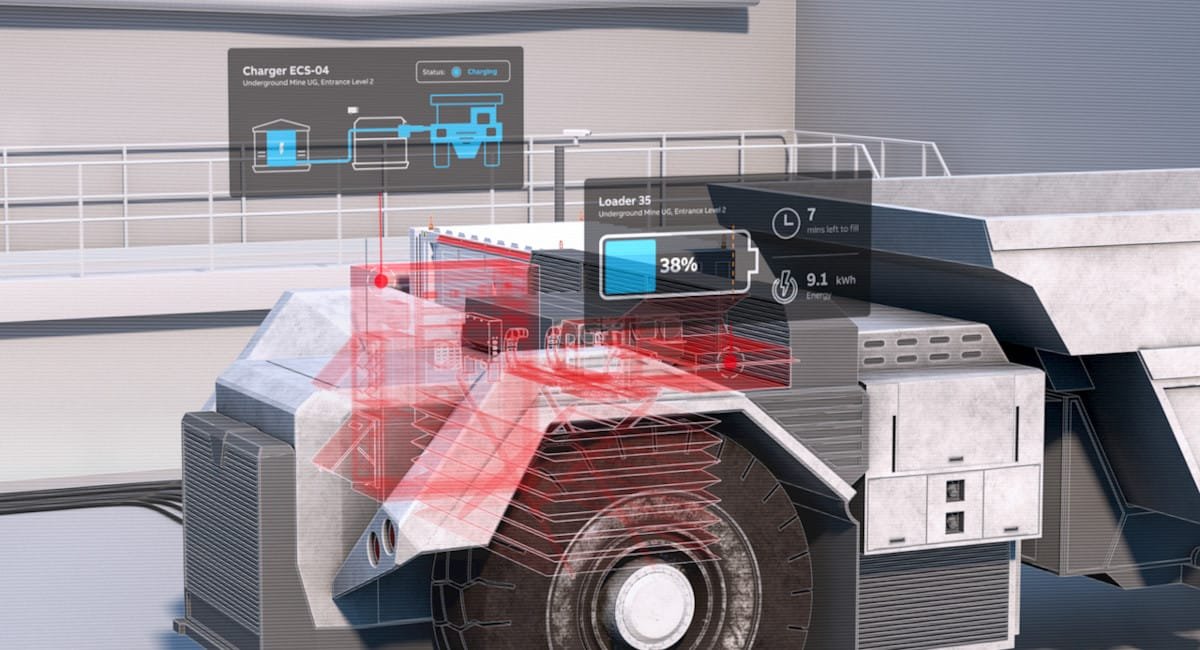
ABB Ability™ eMine is an integrated framework that encompasses electrification and digital solutions across the entire mining lifecycle—from extraction to transportation—helping transition mining operations from fossil fuels to all-electric power. For context, fully electrifying trucks within mines could potentially eliminate 198,000 tons of CO₂ emissions daily. One innovative solution from the eMine portfolio is the ABB eMine™ Trolley System, which operates much like a tram or bus in urban settings, allowing hauling trucks within mines to run on an electric trolley line. This can lead to reductions in diesel consumption by up to 90% and has triggered significant decreases in energy costs and environmental impact. For instance, this system has aided in reducing carbon emissions by 30% at a Canadian mine site.
These solutions combine electrified haulage, high-power automated charging, integrated renewable energy systems, and digital optimization tools aimed at significantly curtailing diesel consumption and emissions while boosting mining productivity and energy use efficiency. Designed to function harmoniously, these technologies ensure measurable, operational reductions in emissions, moving beyond theoretical assertions.
Today, sustainability transcends mere compliance; it has evolved into a key differentiator for competitive advantage. Mining companies that successfully integrate renewable-powered operations, sophisticated carbon monitoring, and low-impact processing are increasingly attracting premium market valuations.
Conclusion: The New Benchmark
The African mining industry is presented with an unequivocal challenge: to reduce emissions while maintaining growth and competitiveness. The era of mere pledges has matured into one characterized by accelerated, quantifiable execution. The dialogue around electric mines and digital mining must converge into a unified conversation.
With electrification, complemented by automation, digital optimization, and renewable energy solutions, the mining landscape is being redefined today. While progress may differ by region due to infrastructure and energy availability, the trajectory is unmistakable.
Mining operations that embark on an integrated approach with a phased, execution-oriented mindset will ultimately characterize the future of sustainable mining across the continent.
