

Disclaimer: For in-person events, we follow an overbooking policy due to potential drop-out rates. Please ensure timely arrival to avoid disappointment.
Evolving Peacemaking in Global Geopolitics
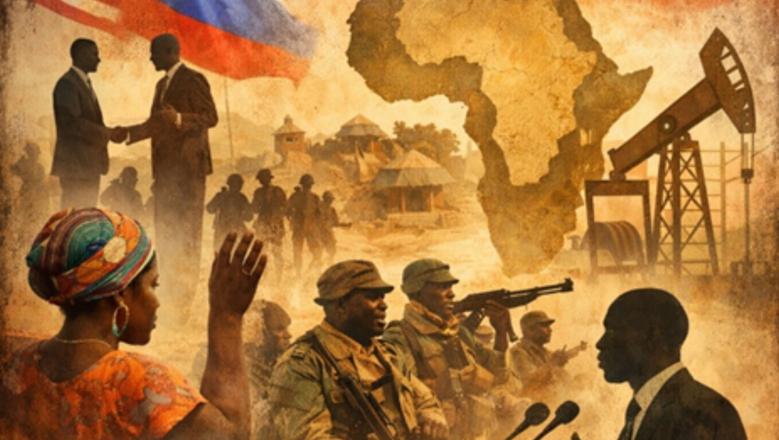
As the landscape of global geopolitics transforms, so too does the practice of peacemaking. A notable development in this area is the increasing use of “extractive mediation.” This approach ties conflict resolution initiatives to access to essential minerals and strategic economic interests, becoming particularly relevant in the ongoing peace efforts within the Democratic Republic of Congo (DRC) and the broader Great Lakes region.
Role of US and Qatari Mediation in the DRC
In this evolving scenario, the United States has facilitated a peace agreement between Rwanda and the DRC. Concurrently, Qatar has pursued its own mediation efforts, focusing on negotiating peace between the DRC government and the Rwanda-supported M23 armed group. These initiatives arise from the shortcomings of African-led approaches to conflict resolution, notably those of the Southern African Development Community (SADC) and the East African Community (EAC), which have struggled to mitigate escalating tensions.
The M23 rebellion re-emerged in 2021, swiftly gaining territory in eastern DRC—particularly in urban centers like Goma and Bukavu—amidst documented support from Rwanda. In response, the EAC’s deployment of a regional force improved humanitarian access but proved ineffective in reversing conflict dynamics. Perceived as biased and overly accommodating to Rwanda, this mission ended prematurely. A subsequent SADC intervention similarly failed to halt the violence. While these actions yielded some humanitarian successes, they did not facilitate meaningful mediation progress or diminish the violence significantly.
Challenges of Extractive Mediation
Given the limitations of regional initiatives, the rise of US and Qatari mediation raises critical questions. The agreement brokered by the US calls for various measures, including the cessation of Rwandan support for armed factions in eastern DRC, and the neutralization of the FDLR. Additionally, a proposed economic partnership framework aims to tie material incentives for peace directly to the management of natural resource revenues, reducing their usage for financing conflict. This bilateral agreement grants the US access to critical minerals within the DRC to secure supply chains.
Qatar has backed discussions by formulating a Declaration of Principles between the DRC government and the M23 group, positioning itself as an additional mediator in a complex diplomatic environment. Despite these efforts, violence endures, progress on implementation is slow, and humanitarian crises worsen. This reality prompts ongoing debates about the effectiveness of transactional peacemaking in fostering sustainable solutions and addressing deep-rooted conflict causes.
Exploring Implications of Extractive Mediation
In light of these developments, the African Leadership Centre is hosting a simulation debate to delve into the implications of extractive mediation on peace, sovereignty, and African agency. Participants are invited to engage in pivotal discussions that challenge prevailing narratives regarding contemporary peacemaking.
- Is extractive mediation merely a contemporary form of neocolonialism, or does it represent the only viable peacemaking strategy for influential nations today?
- Does extractive mediation contribute to the stability of conflict zones, or does it simply redistribute violence and profit, burdening local communities with the aftermath?
- Are African states and regional organizations influencing extractive mediation, or are they being marginally involved in shaping negotiations vital for their security and economic prospects?
- If extractive mediation leads to short-term violence reduction, who has the authority to reject it, and who is being represented in these decisions?
- At what juncture does trading access to essential minerals for security assurances transform into a rational act of state survival that doesn’t infringe on sovereignty?
Keynote Speaker
Professor Christopher Isike
Prof. Christopher Isike serves as a Professor of African Politics and International Relations at the University of Pretoria, South Africa. He is the founding Director of the African Centre for the Study of the United States and aims to contribute to international discourse through over 80 publications in esteemed journals. Professor Isike’s consultancy work includes partnerships with organizations like UNFPA and UNICEF, focusing on gender equality and empowerment.
Moderator and Speakers’ Profiles
Desmond Davies
Desmond Davies brings extensive experience as a journalist covering African affairs since 1972. He has served as Editor of various African-focused publications and currently edits Africa Briefing magazine, adding depth to discussions on Africa’s vibrant narratives.
Chidinma Rita Nebolisa
Chidinma Rita Nebolisa is a Peace, Security, and Development Fellow at the African Leadership Centre. With a focus on radicalization and African politics, her experience spans peace research and policy analysis.
Tonye Marclint Ebiede
Tonye Marclint Ebiede conducts essential research on community peacebuilding and conflict resolution from his position at the Institute for Peace and Conflict Resolution in Nigeria.
Mrinalini Agrawal
Mrinalini Agrawal focuses on governance and decolonial thought, working towards inclusive policymaking and development strategies.
Mwesigwa Peter Claver
With expertise in global security and governance, Mwesigwa Peter Claver investigates migration politics and security intersections integral to regional stability.
Danielle Sophie Tietchou Tegang
Danielle Sophie Tietchou Tegang works on innovative governance approaches rooted in African contexts, seeking effective democratic models for the continent.
About King’s Africa Week
Organized by the African Leadership Centre and Africa Research Group, Africa Week is an annual event that showcases research and educational initiatives related to Africa.
Africa Week gathers together academics, researchers, and students from across King’s College London, providing a valuable platform for African scholars and leaders to share their insights. This event reflects King’s commitment to collaboration with African universities and institutions.
