

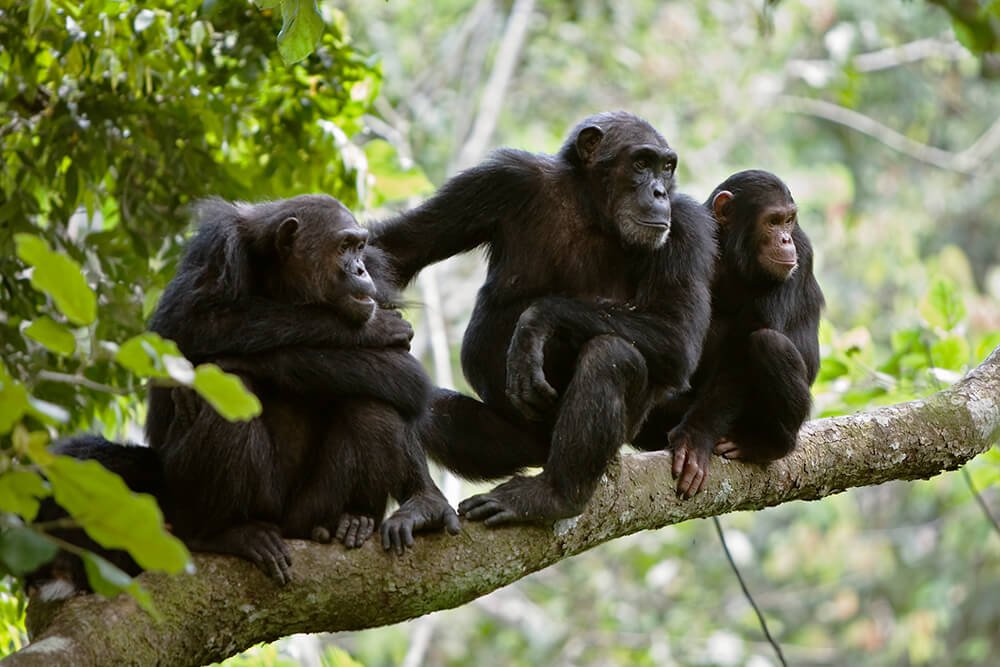
New Census Unveils Chimpanzee Population in Bwindi Impenetrable National Park
The Uganda Tourism Board (UTB) proudly announces exciting new findings from a recent chimpanzee census conducted in Bwindi Impenetrable National Park, located in southwestern Uganda. This census, a collaboration between the Jane Goodall Institute and the Uganda Wildlife Authority, has revealed an estimated population of 426 chimpanzees—the first comprehensive population assessment of its kind in this iconic national park.
Bwindi Impenetrable National Park: A Key Biodiversity Hub
Bwindi Impenetrable National Park is recognized globally as a UNESCO World Heritage Site and is famed for housing over half of the world’s remaining Mountain Gorillas. The recent census findings significantly enhance Bwindi’s reputation as a vital conservation area. This discovery not only adds to Uganda’s image as one of Africa’s most biodiverse destinations but also emphasizes the importance of chimpanzees in the region’s rich ecosystem.
Enhancing Uganda’s Ecotourism Appeal
The implications of this chimpanzee census are substantial for Uganda’s tourism sector. Known for its gorilla trekking experiences, Bwindi attracts travelers seeking exclusive interactions with wildlife. The newfound presence of 426 chimpanzees transforms it into a multi-primate destination, appealing to a wider range of wildlife enthusiasts.
Additionally, these results bolster Uganda’s claim as Africa’s primate capital. Beyond Bwindi, other areas such as Kibale National Park also feature abundant chimpanzee populations. This variety presents travelers with diverse opportunities for primate tracking and enhances Uganda’s competitiveness in the global ecotourism market.
Demonstrating Sustainable Wildlife Management
For visitors and trade partners at events like ITB Berlin, the census results serve as scientific evidence of Uganda’s commitment to sustainable wildlife management and conservation. Modern ecotourism markets increasingly prioritize destinations that yield measurable conservation outcomes. The confirmed chimpanzee populations underscore that Uganda’s dedication to conservation is yielding positive results.
Chimpanzees are particularly sensitive to habitat disturbances, and a stable, growing population indicates healthy forest ecosystems. Such findings have broader implications, contributing to climate resilience, biodiversity protection, and long-term environmental sustainability. The revenue generated from park entry fees not only supports ranger patrols and ecological monitoring but also fosters community engagement and research partnerships, highlighting the vital link between responsible tourism and conservation success.
Invitation to Explore Uganda’s Conservation Efforts
The Uganda delegation at ITB Berlin invites international media, tour operators, investors, and conservation partners to engage with this milestone and explore opportunities to elevate Uganda’s evolving wildlife conservation story. As the nation moves forward in its tourism endeavors, the potential to showcase Uganda’s unique wildlife conservation efforts to global audiences continues to grow.
Related Links:
- Visit Bwindi Impenetrable National Park
- Explore Ecotourism in Uganda
- Learn about the Jane Goodall Institute
This newly-acquired knowledge not only enriches Uganda’s tourism offerings but also demonstrates the country’s ongoing commitment to biodiversity conservation and sustainable tourism practices.
