

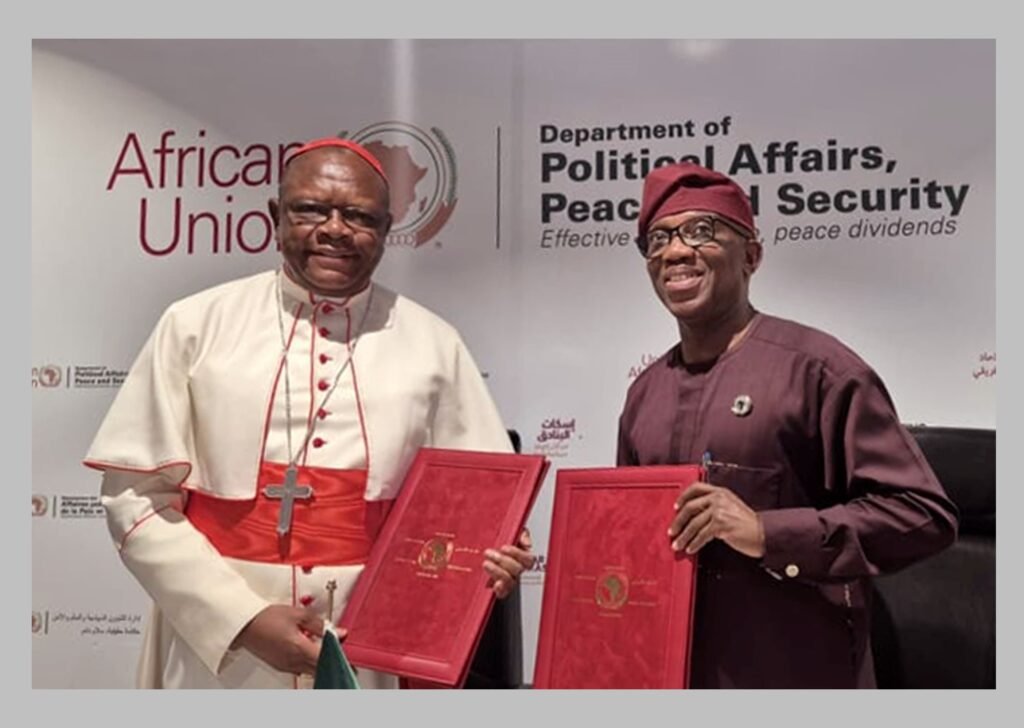
Catholic Church and African Union Join Forces to Tackle Continental Challenges
In a groundbreaking initiative, the Catholic Church in Africa has signed a pivotal Memorandum of Understanding (MoU) with the African Union (AU), aiming to address various pressing challenges across the continent. This agreement, executed on February 13, marks a significant step forward in the partnership between the Symposium of Episcopal Conferences of Africa and Madagascar (SECAM) and the AU, focusing on cooperation, development, and the enhancement of human rights.
Key Objectives of the MoU
The new MoU is structured to address a wide range of issues from fragile governance and armed conflicts to climate vulnerability and the global competition for critical minerals. Moving beyond the previous general framework established in 2015, this agreement fosters a more operational and strategic collaboration anchored within the AU’s Department of Political Affairs, Peace, and Security.
Focus Areas for Collaboration
Cardinal Fridolin Ambongo, president of SECAM, highlighted that the MoU explicitly integrates with the African Union’s Agenda 2063 — a long-term vision for a prosperous and peaceful Africa. The agreement emphasizes governance, democracy, peacebuilding, social cohesion, and collaboration on humanitarian crises, migration, human trafficking, and climate justice.
-
Governance and Peacebuilding: The partnership seeks to enhance governance and foster stability across Africa, addressing issues like electoral violence and extreme political instability.
- Climate Justice and Resource Management: The Church’s extensive on-the-ground presence will now directly influence continental policy, focusing on ethical management of Africa’s natural resources.
Strengthened Institutional Commitment
The new MoU introduces operational tools such as a joint action plan, setting defined priorities, timelines, and mechanisms for monitoring. This structured engagement aims to ensure that the Church’s mission for integral human development is effectively integrated into continental governance.
“This new memorandum is a kairos, a favorable moment for our continent,” said Cardinal Ambongo.
Addressing Africa’s Challenges
The continent faces a myriad of challenges including fragile governance, the threat of violent extremism, and climate change. Cardinal Ambongo believes addressing these issues requires a shift from the past informal collaboration to a more structured and strategic partnership to effectively leverage the Church’s resources and insights.
Current Obstacles and Opportunities
-
Obstacles: Governance deficits, including corruption and weak institutions, remain significant barriers to Africa’s development.
- Opportunities: The youthful and vibrant population presents immense potential, particularly if guided by ethical leadership and enhanced educational opportunities.
The Role of the Church in Development
Historically, the Church has played a vital role in development work throughout Africa, focusing on education, healthcare, and humanitarian aid. With the new partnership, the Church can now directly influence continental policies, ensuring that grassroots voices are heard in discussions about governance, peace, and more.
Connecting with Isolated Communities
The Catholic Church has a unique ability to reach remote and isolated communities, presenting real human experiences to inform AU’s strategies on critical issues like migration and environmental management.
Navigating Global Rivalries
As the world shifts towards a multipolar order, Africa must strategize to avoid becoming a pawn in global power struggles. Cardinal Ambongo emphasizes the need for unity and a coherent strategy that secures Africa’s interests while promoting justice and transparency.
Conclusions on Resource Management
Resources, particularly in the Democratic Republic of Congo, can provide immense benefits but require transparency, ethical negotiations, and the involvement of local communities. The Church advocates for equitable resource management, ensuring that profits from natural wealth benefit the local populace.
“The role of the Church is both prophetic and pastoral,” he stated, emphasizing the need for social justice in economic matters.
The Vision for an Ethical Africa
The Africa we want is one characterized by peace, justice, and the empowerment of marginalized populations. Collaboration between the Church and the African Union aims to ensure that development reflects ethical values and prioritizes human dignity, aligning with the directives of Agenda 2063.
By fostering this partnership and improving institutional coordination, the Church can significantly contribute to Africa’s pursuit of a more prosperous future grounded in ethical principles and human rights.
Related Resources
This partnership between the Catholic Church and the African Union underscores a significant commitment to addressing the critical issues facing Africa today, ensuring that the continent’s path forward is both ethical and inclusive.
