

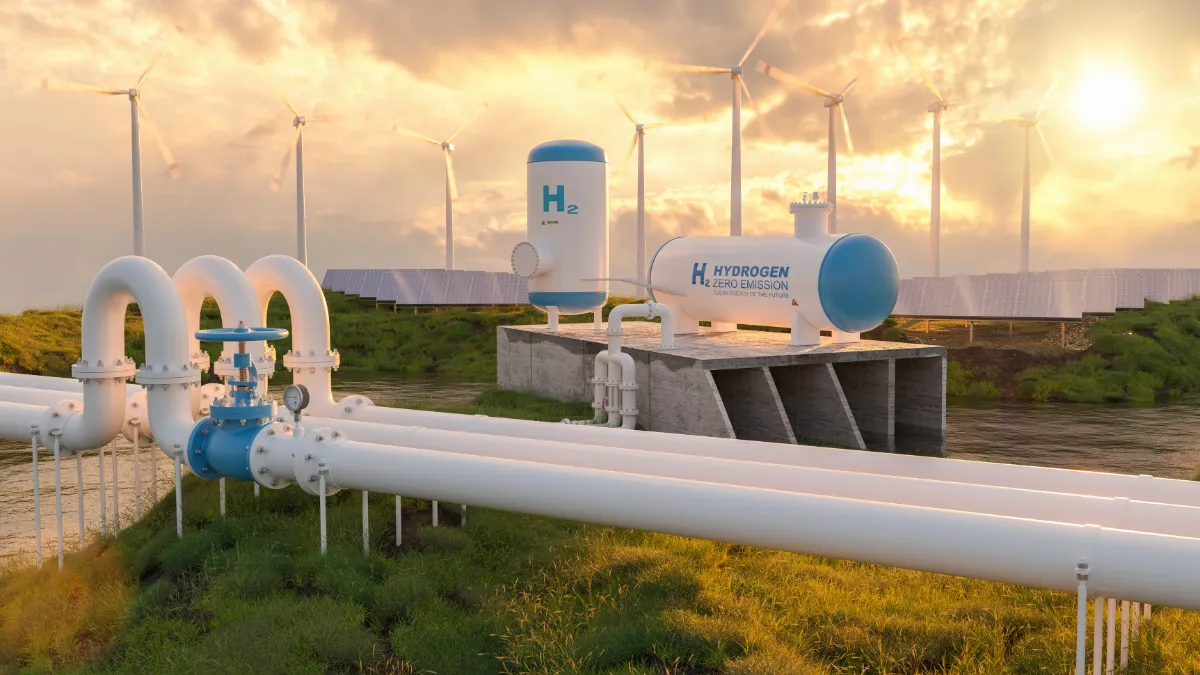
KAHRE Renewable Energy Group Launches Ambitious Green Hydrogen Initiative in South Africa
KAHRE Renewable Energy Group has announced a groundbreaking private sector initiative aimed at transforming South Africa’s energy landscape. This plan envisions a fully integrated net-zero industrial corridor, which will link extensive renewable energy generation in the Northern Cape to green industrial processing and export infrastructure in the Western Cape. The investment required for this ambitious project is estimated to range from R794 billion ($50 billion) to R2.3 trillion ($150 billion) over the next 15 years, positioning South Africa as a potential leader in the emerging global green hydrogen economy.
This development arrives at a pivotal time when South Africa is contending with aging coal infrastructure, ongoing grid challenges, and substantial pressure to decarbonize while ensuring energy security and economic growth. KAHRE’s strategy proposes an innovative path, allowing South Africa to leapfrog traditional energy development frameworks by constructing new infrastructure specifically aimed at the clean energy sector.
A Comprehensive Vision: The Core of an Integrated Ecosystem
The foundation of KAHRE’s strategy revolves around integrating four interconnected projects that collectively form what the company describes as a “scalable energy and infrastructure ecosystem.” This comprehensive platform includes:
- KTE.energy: Renewable power generation
- GreenLink Corridor: Transmission and pipeline infrastructure
- Velddrif Water & Power: Desalination and processing facilities
- EcoVision Velddrif: Sustainable urban development
Dominic Kahre, the founder and CEO of KAHRE Renewable Energy Group, remarked, “What began as a vision years ago is now taking concrete shape. With our integrated South African platform, we are constructing a scalable energy and infrastructure ecosystem designed to support long-term industrial growth, water security, clean power generation, and sustainable urban development.”
The corridor’s ambitious scope aims to achieve up to 20 GW of hybrid solar and wind capacity by full scale, with initial targets of 6 GW generation and 3.5 GW electrolysis capacity by 2030. Full operational capabilities are targeted for 2039.
Utilizing the Northern Cape’s Exceptional Renewable Resources
The renewal hub is located in the Northern Cape, chosen for its exceptional solar and wind resources, which are among the best globally. President Cyril Ramaphosa has highlighted the Northern Cape as pivotal in the clean energy revolution, with an increasing number of power projects focused on solar and green hydrogen.
This region benefits not only from abundant sunlight but also from cost-effective renewable electricity generation, essential for competitive hydrogen production. With large areas of sparsely populated land available for renewable installations, the Northern Cape is strategically positioned to meet both domestic and international energy demands.
The GreenLink Corridor: Private Transmission to Address Grid Limitations
A significant element of KAHRE’s strategy is the 450-kilometer GreenLink corridor, designed to mitigate grid bottlenecks that have previously hampered renewable energy development. This corridor will run alongside the existing Sishen-Saldanha railway, facilitating the transportation of green electricity, hydrogen, ammonia, water, and data.
The alignment with existing railway infrastructure is crucial for expediting land acquisition and streamlining the development of essential infrastructure. By combining various utilities within a single corridor, the GreenLink initiative aims to reduce environmental impacts and simplify regulatory processes.
Coastal Processing: From Desalination to Green Fuels
This renewable energy corridor will culminate at a processing hub in the Saldanha Bay Special Economic Zone, where renewable electricity will power integrated desalination and green fuel production facilities, crucial for establishing connectivity between renewable generation and global green hydrogen markets.
With water supply infrastructure targeted to scale to 150 million liters per day, the efforts will harness the available seawater resources to address the water scarcity issues faced by South Africa. This initiative extends the potential for producing hydrogen, ammonia, and sustainable aviation fuels.
Job Creation and Economic Impact
KAHRE’s corridor is projected to yield approximately 40,000 direct jobs and 120,000 indirect jobs throughout its development phases, contributing significantly to South Africa’s renewable energy sector. Given the country’s high unemployment rate, the job creation potential is critical.
The job opportunities come at a time when South Africa is diversifying economically and seeking new avenues beyond coal. The green hydrogen economy alone is projected to contribute around 3.6% to the GDP and provide about 360,000 jobs by 2050.
Strategic Positioning in Saldanha Bay
Saldanha Bay has been identified as a premium location for the hydrogen hub, benefiting from its exceptional port capabilities. The deep-water port provides crucial logistical advantages for exporting hydrogen and its by-products. Its inclusion as part of Freeport Saldanha seals the strategic nature of this initiative.
Navigating Complex Energy Transition Challenges
KAHRE’s corridor must navigate a complex regulatory landscape as South Africa attempts to redefine its energy framework. The country’s Integrated Resource Plan outlines an ambitious roadmap for energy transformation and includes provisions for private sector participation.
The Just Energy Transition Investment Plan, attracting over R1 trillion in investments, identifies green hydrogen as a focal point. KAHRE’s initiative aligns with this national commitment, offering promise for sustainable economic growth.
Challenges and Risks Ahead
Despite the ambitious vision, KAHRE’s corridor faces technical, commercial, and regulatory challenges ahead. Grid integration and securing necessary environmental and regulatory approvals for large-scale developments are critical factors that will influence the project’s feasibility.
Market development for green hydrogen derivatives is another major risk, with the need to secure long-term customer commitments essential for financial viability.
Regional and Continental Context
The project must also be viewed in conjunction with other major African initiatives aimed at positioning the continent as a significant player in the global green hydrogen market. Neighboring countries like Namibia and Egypt are advancing similar projects, creating both competitive and cooperative dynamics.
Environmental and Social Considerations
As large-scale developments unfold, KAHRE must address potential environmental and social impacts. Careful planning around land use and community engagement will be essential for maintaining local support and ensuring sustainable development practices.
Pathway to Implementation: Next Steps
To move from concept to reality, KAHRE needs to establish interim milestones. Securing environmental approvals, financial commitments, and operational contracts will be critical steps in the journey.
Implications for South Africa’s Future
If executed as planned, KAHRE’s corridor could represent a transformation in South Africa’s energy landscape, driving economic growth and contributing significantly to the local job market. It could validate the private sector’s role in reinvigorating the nation’s energy infrastructure.
Conclusion: Execution is Key
KAHRE Renewable Energy Group’s launch of its net-zero industrial corridor holds transformative potential. While the pathway ahead is filled with challenges, the vision encapsulates a critical step toward realizing South Africa’s renewable energy ambitions.
