

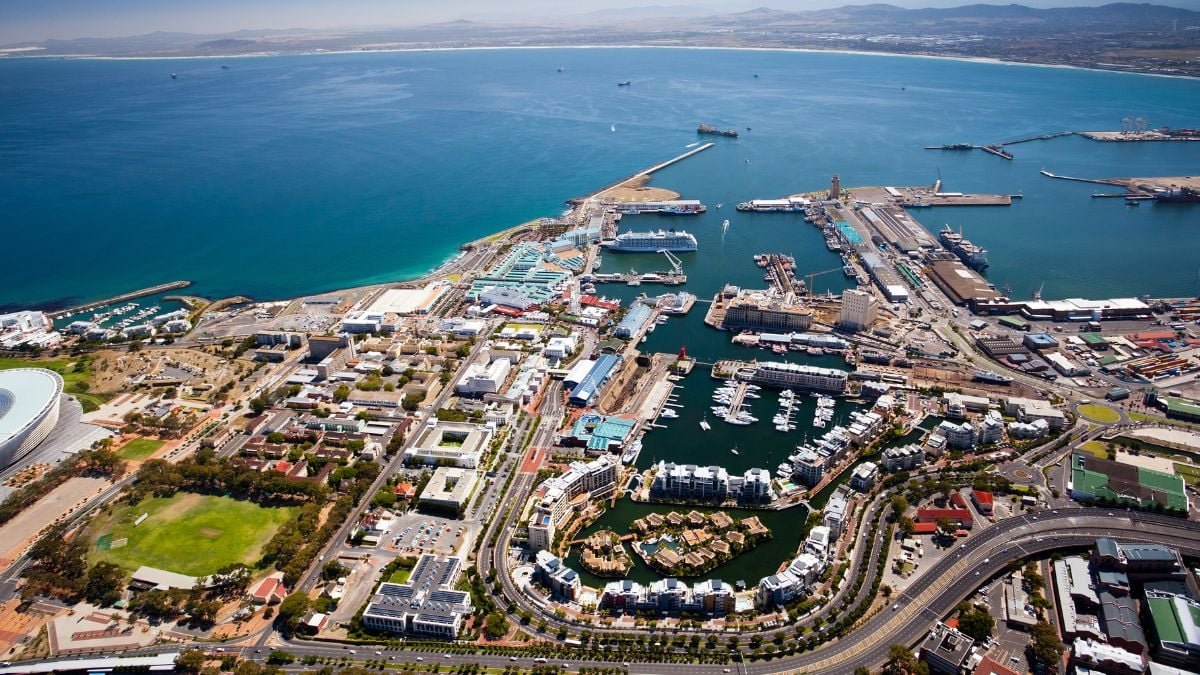
The V&A Waterfront: A Pillar of Economic Growth in South Africa
The V&A Waterfront stands as one of South Africa’s most cherished assets, generating over R11 billion in retail sales in 2025—averaging more than R30 million in sales daily. This iconic destination is not only a hub of commerce but also a cultural landmark, steeped in history since its establishment in the mid-19th century.
Historical Significance
Named after Queen Victoria and her son, Prince Alfred, the area was pivotal for maritime trade, serving as a crucial stopover for ships navigating routes between Europe and the East. At its inception in 1860, Cape Town faced significant challenges, including the exposure of its harbor to harsh winter storms, prompting the British colonial administration to construct protective infrastructure. This included the development of the Victoria Basin in 1869 and the Alfred Basin in 1905, transforming the harbor into a vital part of South Africa’s maritime trade, fishing, and naval services well into the 20th century.
Modern Development
In 1988, the Victoria & Alfred Waterfront Company was formed under Transnet (formerly Portnet) to revitalize the historic docks into a mixed-use precinct. This redevelopment launched the modern iteration of the V&A Waterfront, leading to significant ownership changes in 2011 when Growthpoint Properties acquired a 50% stake, with the Public Investment Corporation maintaining the other half on behalf of the Government Employees Pension Fund. This transaction, valued at R9.6 billion, marked it as South Africa’s largest single property deal at that time, propelling growth and value within the precinct.
Economic Impact
Today, the V&A Waterfront plays a crucial role in the economy, supporting over 83,000 direct and indirect jobs and contributing more than 1.5% to the Western Cape’s GDP. In a statement reflecting the precinct’s resilience, V&A Waterfront CEO Graham Wood highlighted the success of attracting 25 million visitors in 2025, maintaining visitor levels despite ongoing construction and developments.
Looking Ahead: Future Growth Prospects
Graham Wood, who recently took over as CEO, showcased optimism for the future, anticipating continued growth as new developments are introduced. Notably, the luxury retail wing and the EDITION hotel, which is set to enhance the coastal charm further in 2026, symbolize the infrastructural advancements aimed at integrating the development with the projected superyacht basin opening in October.
Tourism and Cruise Industry Expansion
The tourism sector remains a vital economic driver, accounting for 9% of GDP and supporting approximately 1.8 million jobs. In 2025, Cape Town Cruise Terminal welcomed 74 ships, accommodating 126,000 passengers and 45,000 crew members, demonstrating the area’s potential in cruise tourism despite geopolitical challenges. Wood noted the strength of international air access bolstering Cape Town’s global profile, ensuring a bright outlook for the industry.
Conclusion
The V&A Waterfront epitomizes the dynamic blend of history and modernity, continuing to enhance its reputation as a premier global destination. As it moves into 2026 with significant new developments, the V&A Waterfront is poised to contribute even more to South Africa’s economic landscape, benefiting jobs, small businesses, and the overall economy.
The V&A Waterfront in Photos


